
Different Types of Catering Services Explained
Explore different types of catering services, including buffet, full-service, corporate, wedding, bulk food, meal boxes, and drop-off catering.

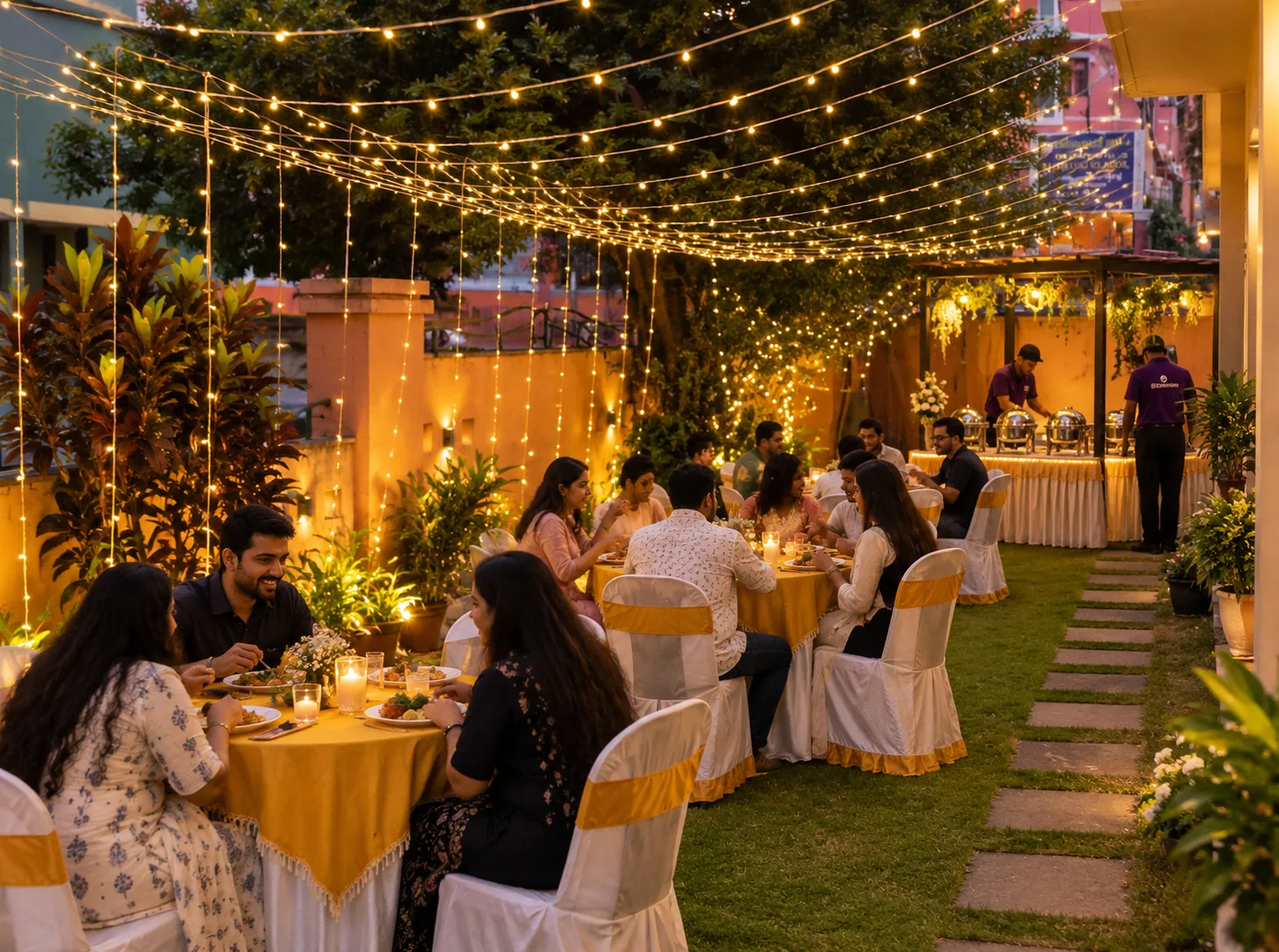
Catering services have become an important part of planning everything from small family gatherings to large weddings and corporate functions. But catering is not a single type of service. Depending on the occasion, guest count, venue, budget, and level of assistance required, customers can choose from several catering formats.
Some people need a complete dining arrangement with staff and buffet setup, while others only need prepared food delivered to a location. Understanding the different options makes it easier to select a catering format that fits the event without paying for services that are not necessary.
1. Full Service catering
This Full-service catering is designed for occasions where the catering team handles several aspects of the food arrangement. This may include menu planning, food preparation, transportation, buffet setup, serving staff, crockery, cutlery, and sometimes cleanup.
This type of catering is commonly considered for weddings, large family functions, milestone celebrations, and formal events. The advantage is convenience because the host does not need to coordinate every food-related task personally. However, the total cost can be higher because the service includes more than just preparing the food.
2. Buffet Catering
Buffet catering is one of the most familiar catering formats. Food is arranged at one or more counters, and guests can choose dishes according to their preferences. Depending on the event, staff may be present to refill dishes, maintain the serving area, and assist guests.
Buffets are particularly useful when guests have different food preferences because they can select what they want to eat. Menu planning should consider the number of guests, serving space, food variety, and the expected flow of people through the buffet area.
3. Plated Meal Catering
Plated catering follows a more structured dining format. Instead of guests serving themselves from a buffet, individual meals are portioned and served at the table. This style is often associated with formal dinners, business events, receptions, and celebrations where a coordinated dining experience is preferred.
The menu generally needs to be planned carefully because every guest receives a predetermined meal. Seating arrangements, serving staff, timing, and dietary requirements also become important considerations. Plated service can create a more organized dining experience but usually requires greater coordination.
4. Drop-Off Catering
Drop-off catering is a simpler option for people who want professionally prepared food without onsite catering staff. The food is prepared, packed appropriately, and delivered to the specified location.
This format can work well for office meetings, small parties, family gatherings, workshops, and casual celebrations. Once the food arrives, the host or event organizer takes responsibility for serving it. It can therefore be a practical choice when professional onsite assistance is not required.
5. Corporate Catering
Corporate catering focuses on the needs of workplaces and business events. It can cover office lunches, employee meals, conferences, training sessions, meetings, product launches, seminars, and team celebrations.
The main priorities are usually punctual delivery, convenient portions, suitable packaging, and menus that can accommodate different preferences. Depending on the event, companies may choose individual meal boxes, snacks, buffet arrangements, or larger group meals. For recurring requirements, consistency and dependable scheduling can be just as important as menu variety.
6. Wedding Catering
Wedding catering often requires more detailed planning because weddings can have large and diverse guest lists. Food arrangements may include welcome drinks, starters, main courses, desserts, regional dishes, and multiple meal sessions.
The catering style can range from a traditional buffet to plated meals or a combination of different formats. Menu selection should take into account the wedding schedule, venue facilities, number of guests, cultural preferences, and dietary requirements. Advance planning is especially useful when several functions are being held across different days.
7. Party and Social Event Catering
Birthday parties, anniversaries, housewarming celebrations, reunions, and other social gatherings often require flexible catering arrangements. The food may be served as a buffet, individual portions, snack stations, or delivered in bulk.
For informal events, hosts generally look for food that is easy to serve and suitable for a mixed group of guests. The menu can include starters, main dishes, snacks, desserts, and beverages depending on the time of day and nature of the celebration.
8. Outdoor and Event Catering
Outdoor catering involves preparing and serving food at locations such as gardens, open grounds, community spaces, or event venues. Unlike standard food delivery, outdoor catering may require additional logistical planning.
The catering team may need to consider transportation, food holding temperatures, serving equipment, tables, electricity, water availability, weather conditions, and the layout of the venue. A site visit or detailed venue discussion can help identify practical challenges before the event begins.
9. Food Box and Meal Box Catering
Meal boxes are individually packed meals designed to make distribution straightforward. Each box can contain a complete meal or a selected combination of dishes.
This format can be useful for office employees, school or college events, workshops, travel groups, small gatherings, and situations where guests need to eat at different times. Individual packaging also makes portion distribution easier because each person receives a predefined meal.
10. Bulk Food Catering
Bulk food catering is intended for situations where food needs to be prepared in larger quantities but a complete onsite service is unnecessary. Instead of individual meal boxes, dishes can be supplied in larger containers for a group to share.
A Bulk Food Order can be useful for family functions, office gatherings, community events, celebrations, and house parties where the host already has a serving arrangement. The important factors include guest count, menu selection, portion requirements, delivery timing, and appropriate food packaging.
11. Vegetarian and Specialized Catering
Some events have specific dietary requirements, making specialized menu planning necessary. Vegetarian catering is common for family functions, religious occasions, office events, and celebrations. Other requirements may include Jain food, vegan choices, gluten-conscious meals, or dishes prepared without particular ingredients.
Hosts should communicate these requirements before confirming the menu. When the caterer knows about dietary needs in advance, ingredients, preparation methods, separate portions, and labeling can be planned more effectively.
12. Snack and High-Tea Catering
Not every event requires a complete lunch or dinner. Snack catering focuses on smaller food items that can be served during meetings, celebrations, evening gatherings, or breaks between sessions.
Depending on the occasion, a menu may include savouries, sandwiches, sweets, beverages, regional snacks, or light refreshments. High-tea arrangements can also be useful for corporate meetings and social functions where guests need refreshments rather than a complete meal.
How to Choose the Right Catering Service
The right catering format depends on the event's practical requirements. Start by determining the number of guests, venue, event duration, preferred cuisine, budget, and level of assistance required.
For example, someone organizing a small home gathering may only need delivered food, while a large wedding may require staff, buffet setup, and complete coordination. Similarly, an office meeting may be easier to manage with individually packed meals.
When comparing Best Catering Services in Bangalore, look beyond the menu price and check what is included in the quotation. Delivery, staff, setup, crockery, packaging, and customization can significantly affect the overall arrangement.
What Should You Ask a Caterer Before Booking?
Before making a decision, ask clear questions about the service. Confirm the menu, portion sizes, delivery schedule, setup requirements, staff availability, and additional charges.
It is also worth discussing dietary requirements and what happens if the final guest count changes. A detailed quotation can prevent misunderstandings later. If you are comparing Food Caterers in Bangalore, reviewing these practical details can help you understand how each service differs rather than comparing providers based only on headline pricing.
Food Catering vs Full-Service Catering
The terms can sometimes sound interchangeable, but they can describe different levels of assistance. Food Catering may focus primarily on preparing and supplying food, whereas full-service catering can extend to buffet setup, serving staff, crockery, cutlery, and event coordination.
The appropriate choice depends on how much responsibility the host wants to retain. If the venue already has serving arrangements and staff, a food-focused option may be sufficient. If the host wants support throughout the meal service, a more comprehensive package may be appropriate.
How Catering Can Make Event Planning Easier
Food is often one of the most time-consuming parts of an event. Someone has to decide what to serve, calculate quantities, arrange preparation, transport the food, organize serving, and deal with leftovers.
Professional catering transfers many of these responsibilities to an experienced service provider. This can allow hosts to spend more time welcoming guests and managing other aspects of the occasion. The exact benefits depend on the catering format selected, so understanding the available options is important.
Final Thoughts
Catering services come in many forms, from simple food delivery and bulk orders to complete event dining arrangements. There is no single format that suits every occasion. A small family gathering may need only prepared food, while a wedding or corporate function could require staff, setup, and coordinated service.
The best approach is to begin with the event requirements and then choose the catering format accordingly. Consider the guest count, menu, venue, budget, dietary needs, timing, and amount of assistance required before confirming the service.
Frequently Asked Questions
1. What are the main types of catering services?
Common types include full-service catering, buffet catering, plated meals, drop-off catering, corporate catering, wedding catering, party catering, meal boxes, bulk food service, outdoor catering, and snack catering.
2. Which catering service is suitable for a small party?
For a small party, drop-off catering, meal boxes, or bulk food delivery can be practical. The right choice depends on whether guests need individual portions and whether serving staff are required.
3. What is full-service catering?
Full-service catering generally involves more than food preparation. Depending on the package, it may include menu planning, food delivery, buffet setup, serving staff, crockery, cutlery, and cleanup.
4. Is buffet catering suitable for weddings?
Yes. Buffet catering is commonly used for larger celebrations because guests can choose from several dishes. The venue should have adequate space for the buffet and guest movement.
5. What is bulk food catering?
Bulk food catering involves supplying larger quantities of prepared dishes for a group rather than individual portions. It can work well for family gatherings, office functions, and casual celebrations.
6. Is meal-box catering useful for corporate events?
Yes. Individual meal boxes can make distribution easier during office meetings, conferences, workshops, and employee events. They can also simplify portion control.
7. Can catering menus be customized?
Menu customization depends on the caterer and service package. Customers should discuss preferred dishes, cuisine, dietary requirements, guest count, and budget before finalizing the menu.
8. What should I check before hiring a caterer?
Check the menu, portions, delivery, staff, setup, crockery, packaging, additional charges, dietary options, cancellation terms, and arrangements for changes in guest numbers.
9. Does catering always include serving staff?
No. Serving staff are generally included only when the selected package provides onsite service. Drop-off and bulk food services may only cover food preparation and delivery.
10. How early should catering be booked?
The required notice depends on the event size, date, menu complexity, and service type. Larger events and customized menus generally benefit from earlier planning, particularly during busy event seasons.
Author

Get Stories and special offers delivered Right to your Inbox
Frequently
asked questions
How do I place an order on EZGatherr?
You can browse menus and services, select your requirements, and place an order directly through the platform. Our team may connect with you to finalize details.
Is there a minimum order requirement?
We dont have the concept of Minimum order quantities however we do have Minimum order value which is INR3000/-
How early should I book my event?
We recommend booking at least 2days in advance for small catering events however all delivery orders can be booked a day prior. Pooja & Event services should be booked 3days in advance.
Can I customize the menu or services?
Yes, we offer flexibility to customize menus, portion sizes, and service inclusions based on your preferences.
When is my order confirmed
Your order is confirmed once the required advance payment is completed and you receive a booking confirmation from our team.