House Warming Flower Decoration: A Florist's Guide to Garlands, Torans and What Survives a Long Pooja
A florist's guide to house warming flower decoration: marigold, jasmine and mango leaves, entrance torans, pooja areas, quantities and timing.

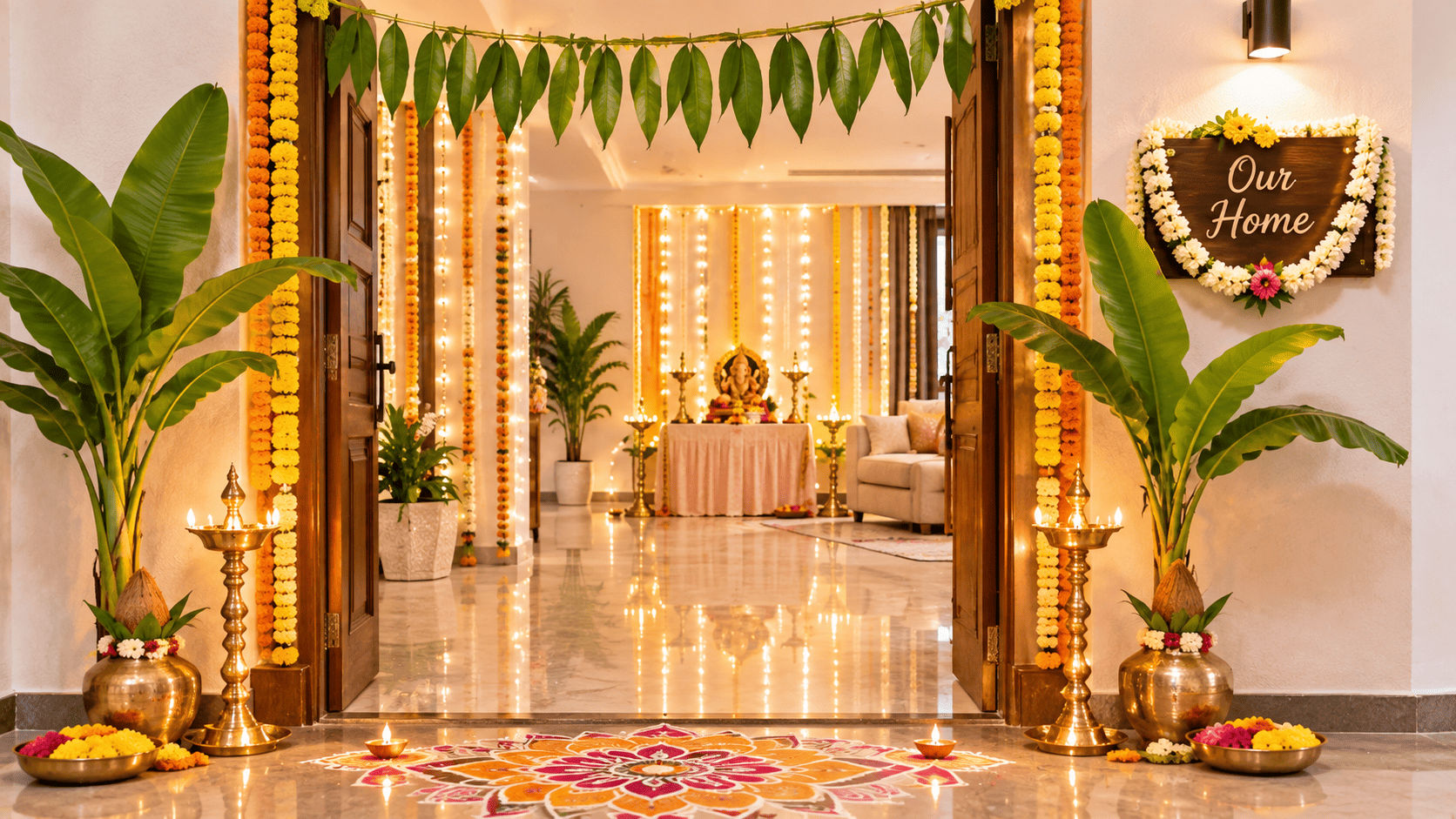
A florist who has supplied flowers for hundreds of griha pravesh ceremonies says the same thing every season. "Customers call a day before and say, 'Just flowers, nothing fancy.' And then they describe forty metres of garland, a floral kalash, a fresh toran and a bouquet for every room." She laughs. "Nothing fancy is a lot of flowers."
This expert-style write-up, drawn from what florists and decorators describe, is about house warming flower decoration: which flowers suit a new home, how to use them at the entrance, the pooja area and the living room, and how to plan quantities and timing. It is for anyone looking at house warming flower decoration who wants a clear, practical picture.
Why Flowers at a Housewarming
Flowers carry meaning in Indian homes. Marigold, jasmine, rose, lotus and tulsi are used in rituals, as offerings and as signs of welcome. A new home begins with an auspicious entry, and flowers are part of the sign.
They also do something practical. A bare new home, with white walls and little furniture, looks warmer and more alive with flowers. A few garlands and arrangements make the space feel considered.
The Flowers and What They Do
Marigold
Bright, hardy and affordable. Orange and yellow marigolds are the staple of Indian decoration. They hold up well for several hours, even in warmth, and they are available almost everywhere.
Best for: garlands, torans, door frames, pooja platforms.
Jasmine
Fragrant, delicate and traditionally associated with purity and welcome. It wilts faster in heat, so timing matters.
Best for: strings for the pooja area, small garlands, fragrance near the entrance.
Rose
Elegant and versatile. Red roses suit traditional settings, and pink and white roses suit a softer look.
Best for: arrangements, bouquets, floral hoops, table decoration.
Tuberose
Intensely fragrant and long-stemmed. Often used in vases and arrangements.
Best for: vases, entrance tables. Strong scent, so use with care in small rooms.
Lotus
Sacred and beautiful, used in offerings and arrangements.
Best for: pooja arrangements, floating bowls.
Chrysanthemum and Gerbera
Hardy, colourful and affordable. They add volume.
Best for: fillers in arrangements and backdrops.
Mango Leaves and Banana Leaves
Not flowers, but essential. They are auspicious, green and plentiful.
Best for: torans, kalash, door frames and serving.
Where to Put Flowers
The Entrance
The most important place. A toran of mango leaves with marigold, a garland on the door frame and a rangoli at the threshold. A small floral arrangement beside the door welcomes guests.
The Pooja Area
Flowers for offerings, a garland for the deity, fresh strings around the platform and a kalash decorated with flowers.
The Living Room
An arrangement on a table, a floral garland along a wall or a floral backdrop behind a seating area.
The Dining Area
A small arrangement on the table, or flowers floating in bowls.
The Kitchen
A small bunch of marigold or a garland near the stove, according to family tradition.
Each Room
Some families place a small garland or a bowl of petals in each room, as a blessing.
Fresh or Artificial?
Florists are honest about this. Both have a place.
Fresh flowers are fragrant, traditional and beautiful, and they are essential for offerings. They wilt, particularly in heat, and require timing.
Artificial flowers last, hold colour and suit large backdrops. They lack fragrance and sometimes look less natural up close.
A mix gives the best balance. Artificial flowers for large structures, and fresh flowers for garlands, offerings and arrangements.
At the time of writing, EZGatherr's decor page lists packages with artificial flowers and strings of marigold, and house-warming decoration in Bangalore. Check the listings for what is included, and ask about fresh flowers for the pooja.
Estimating Quantities
Florists use rough guides, and the best approach is to ask the florist directly. A few general principles.
- Door frames. Measure the frame. Garlands are sold by length.
- Toran. A standard door toran is a few feet. For wider doors, ask for a larger one.
- Pooja platform. A few strings and a small arrangement.
- Living room. One focal arrangement and one garland are enough.
- Backdrop. Large backdrops use many flowers. Artificial flowers save cost.
- Extras. Order about 10 percent more, since some flowers will be damaged.
Always ask whether the quantity is per string, per kilogram or per piece. Units vary.
Timing and Freshness
Fresh flowers are best close to the event.
- Order early. On auspicious days, demand spikes.
- Collect on the morning. Or ask for delivery in the early hours.
- Keep them cool. In water, in a shaded place, wrapped in damp cloth.
- Place late. Garlands and torans go up an hour or two before the pooja.
- Avoid the sun. Direct sun wilts delicate flowers quickly.
A day-before setup works for artificial decoration. For fresh flowers, plan for the morning.
Practical Considerations in a New Home
- Fixing. New paint can peel. Use gentle hooks, tape that is designed for walls or free-standing frames.
- Water. Floral arrangements need water. Use stable containers, away from edges.
- Floors. Petals and leaves fall. Plan a quick clean.
- Allergies. Some guests react to strong scents or pollen. Choose accordingly.
- Pets and children. Some flowers and leaves are toxic. Keep arrangements out of reach if relevant.
- Fire safety. Keep flowers away from lamps and incense.
Budget Thoughts
Flower costs vary with season, type and quantity.
- Marigold and chrysanthemum are affordable and abundant.
- Rose and jasmine cost more.
- Exotic flowers can be expensive and difficult to source.
- Festival and wedding seasons raise prices.
To manage cost, use marigold generously, add a few premium flowers as accents and combine fresh and artificial elements. At the time of writing, EZGatherr's decor listing shows prices with GST noted separately and a range extending up to ₹23,999. Check current prices for housewarming packages.
After the Pooja
Flowers used in a pooja are traditionally treated with respect. Families often immerse them in flowing water, or compost them. Ask the priest or elders about the custom. Decorative flowers can be composted, or donated to a temple, where permitted.
A Gentle Conclusion
Flowers make a new house feel like a home. A toran at the door, a garland on the pooja platform and one arrangement in the living room are enough. If you are exploring house warming flower decoration, choose the flowers that suit your tradition and your climate, and be generous with marigold and greenery.
Read More
- House-warming decoration in Bangalore
- Baby shower flower decoration in Bangalore
- Floral birthday decorations in Bangalore
- Pooja services in Bangalore
- Event decoration services in Bangalore
Planning something similar? See our event decoration in Bangalore.
Read more
 Small Party Caterers in Bangalore: Hosting 10 to 40 Guests in an Apartment
 How to Plan the Perfect Hi-Tea Party Catering in Bangalore
 Small Party Catering in Bangalore: How to Plan the Perfect Food Menu
 Small Party Caterers in Bangalore: A Housewarming for 25 in a Two-Bedroom Flat
 Catering Services in Kanakapura Road: Townships, Farmhouses and Open-Air Celebrations