Buffet, Plated or Live Counters: Which Catering Service Style Suits Your Event?
Compare buffet, plated, live counter, passed and self-serve styles to pick the catering service format that fits your guests, space and budget.

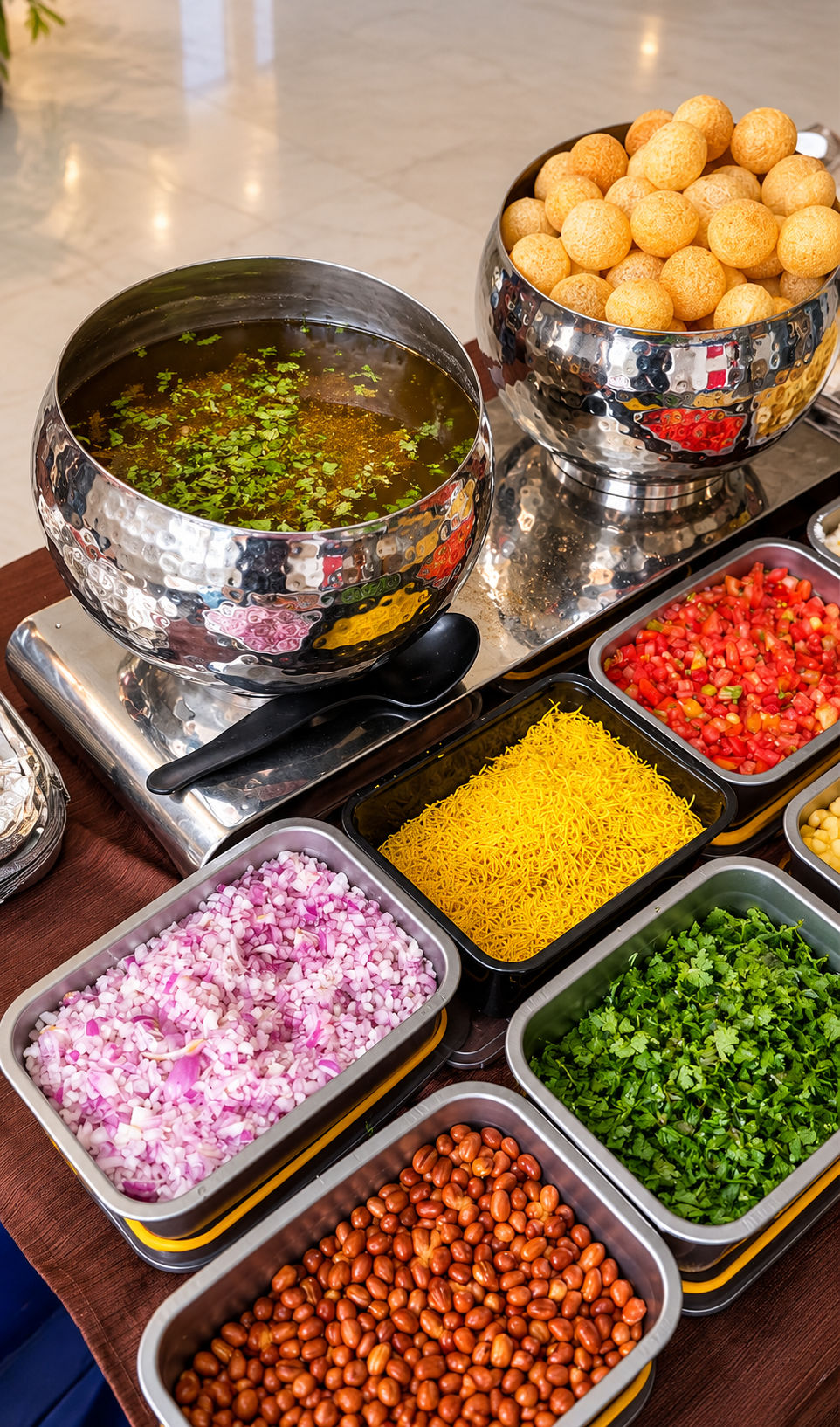
When people plan event food, they spend most of their time on the menu. Which paneer dish, how many starters, one dessert or two. Far less thought goes into how that food will reach the guests, even though the service style shapes the evening more than any single dish.
The same menu feels generous at a buffet, formal when plated and lively at a live counter. It also costs different amounts, needs different space and asks different things of the host. This guide compares the main service styles so you can choose a catering service that fits your occasion.
The Five Service Styles
1. Buffet
Food is arranged on a counter and guests serve themselves, with staff refilling and clearing.
Strengths
- Guests choose what and how much they eat
- Handles mixed dietary needs easily
- Works for almost any group size
- Efficient use of staff
Limitations
Queues form if there is only one counter
Needs floor space for the line
Elderly guests may need help carrying plates
Best for: birthdays, housewarmings, anniversaries, office celebrations and most functions between 25 and 300 guests.
2. Plated or Sit-Down Service
Guests are seated and each course is brought to the table.
Strengths
- Feels formal and considered
- No queues and no carrying plates
- Portions are controlled, so waste is low
- The host controls the pace of the meal
Limitations
- Needs more service staff
- Requires seating and table space for every guest
- Less choice for guests unless options are collected beforehand
- Slower for large groups
Best for: intimate dinners, milestone anniversaries, formal business dinners and traditional seated meals at ceremonies.
3. Live Counters
A chef prepares or finishes dishes in front of guests. Chaat, dosa, pasta and tandoor counters are common examples.
Strengths
- Food is fresh and hot
- Adds activity and conversation to the event
- Guests can customise their plate
Limitations
- Slower per guest than a buffet
- Needs power, ventilation and a safe working area
- Costs more because of the chef and equipment
- Not all venues or apartment associations permit live cooking
Best for: larger celebrations, receptions and events where the food is part of the entertainment. Live counters usually complement a buffet instead of replacing it.
4. Passed Service
Staff circulate with trays of bite-sized food. There is no counter during this phase.
Strengths
- Keeps guests mingling
- Works in rooms with little furniture
- Sets an elegant tone
Limitations
- Not a full meal unless followed by something substantial
- Needs attentive staff
- Harder to guarantee everyone gets every item
Best for: cocktail evenings, sundowners, receptions and the first hour of any larger party.
5. Drop-Off or Self-Serve
Food is delivered in bulk containers or individual boxes with plates and cutlery. There are no staff on site.
Strengths
- The most economical style
- Quick to arrange, sometimes on the same day
- No setup or equipment in your home
Limitations
- Someone in the family manages the table
- Less presentation
- Food is not actively kept hot
Best for: house parties, team lunches, small poojas and gatherings of 10 to 30. See bulk food delivery.
How to Choose: Six Questions
How many guests?
Under 15, plated or self-serve both work. Between 15 and 40, self-serve or a compact buffet. Above 40, a buffet is the practical choice, with additional counters as numbers rise.
How formal is the occasion?
A relaxed get-together suits self-serve or a buffet. A milestone or business dinner benefits from passed starters and a plated or well-staffed buffet meal.
How much space do you have?
Plated service needs a seat for every guest. A buffet needs a wall and a queue path. Passed service needs almost nothing. In a compact apartment, a single-table buffet or self-serve trays are usually the only realistic options.
Who is coming?
Many elders: lean toward seated service, or a buffet with staff carrying plates to them. Many children: a buffet or boxes. A mixed-diet group: a buffet with clear labels.
How long is the event?
A two-hour dinner suits a buffet. A four-hour open house suits passed food and replenished trays. A meal squeezed between sessions suits boxes.
What is the budget?
In rising order of cost per guest, the usual sequence is self-serve, boxes, buffet, buffet with live counters, and plated service. Staff and equipment account for the difference more than the food.
Combining Styles
The most successful events often mix two styles.
- Passed starters, then a buffet. The classic format for anniversaries and receptions.
- Buffet with one live counter. Adds interest without the cost of several stations.
- Buffet for guests, seated service for elders.
- Snack boxes for children, buffet for adults.
- Self-serve mains with a hired service person. A middle path for home parties.
Ask your caterer which combinations they offer and what each adds to the price.
What Each Style Asks of the Host
It helps to be honest about how much you want to do on the day.
- Self-serve: you receive the food, lay it out, keep an eye on it and clear up afterwards.
- Buffet: you show the team where to set up and tell them when to open. They do the rest.
- Plated: you agree the courses and timings in advance, then sit down with your guests.
- Passed service: you brief staff on the order of items and stay out of the kitchen.
- Live counters: you confirm power, space and permissions beforehand.
If the idea of refilling a dal mid-conversation fills you with dread, choose a staffed style.
Common Mistakes
- Choosing by habit. A buffet is not automatically right for twelve people.
- Underestimating space. Measure where the counter will go.
- One counter for too many guests. Above roughly 80 to 100 people, ask for a second service point or a double-sided counter.
- Forgetting elders. Arrange for plates to be brought to them.
- Live counters without checking venue rules. Confirm power and permissions first.
- No plan for used plates. Decide where they go and who clears them.
What the Styles Look Like on EZGatherr
EZGatherr organises its catering around service formats so the choice is clear from the start.
Gather Feast is the staffed buffet. Each package lists food, service staff, cutlery and crockery, and setup, with a listed minimum of 10 guests. It is described as a quick-setup buffet suited to house parties, birthdays, anniversaries and corporate events.
Gather Box is self-serve bulk delivery, with food arriving ready to serve along with plates and cutlery.
Gather Bento is individually packed meal and snack boxes, with a listed minimum of 10 boxes. See meal box delivery.
The site also mentions live food counters as an optional add-on when planning an event. Availability depends on the venue and the order, so ask when you request a quote.
A Quick Decision Guide
- House party for 15 friends: self-serve trays
- Birthday for 40 in a clubhouse: staffed buffet
- Anniversary dinner for 30: passed starters and a buffet
- Formal dinner for 12: plated or delivered and served at the table
- Training for 60: meal boxes
- Reception for 200: buffet with two service points and a live counter
- Open house over four hours: replenished trays or passed food
Frequently Asked Questions
Which service style is the most economical?
Self-serve bulk delivery, since there is no staff or equipment cost.
Is a buffet suitable for a small party?
Yes. Compact buffets work from around 10 guests, though self-serve is often simpler under 20.
Are live counters worth the extra cost?
For larger celebrations, one counter adds freshness and interest. For small events it is usually unnecessary.
How many buffet counters do I need?
One counter handles most events up to about 80 guests. Beyond that, ask for a second service point.
Can I mix service styles at one event?
Yes. Passed starters followed by a buffet is the most common combination.
Read More
- Catering services in Bangalore
- Different Types of Catering Services Explained
- What Does a Caterer Do? Complete Catering Guide
- How to Choose Catering Services in Bangalore
- Premium catering in Bangalore
Planning something similar? See our catering services in Bangalore.
Author
Get Stories and special offers delivered Right to your Inbox
Frequently
asked questions
How do I place an order on EZGatherr?
You can browse menus and services, select your requirements, and place an order directly through the platform. Our team may connect with you to finalize details.
Is there a minimum order requirement?
We dont have the concept of Minimum order quantities however we do have Minimum order value which is INR3000/-
How early should I book my event?
We recommend booking at least 2days in advance for small catering events however all delivery orders can be booked a day prior. Pooja & Event services should be booked 3days in advance.
Can I customize the menu or services?
Yes, we offer flexibility to customize menus, portion sizes, and service inclusions based on your preferences.
When is my order confirmed
Your order is confirmed once the required advance payment is completed and you receive a booking confirmation from our team.