Film Catering in Bangalore: How to Feed a Shoot Crew on Location
Planning film catering for an ad film or shoot in Bangalore? Learn meal timings, menus, formats, location checks and food safety on set.
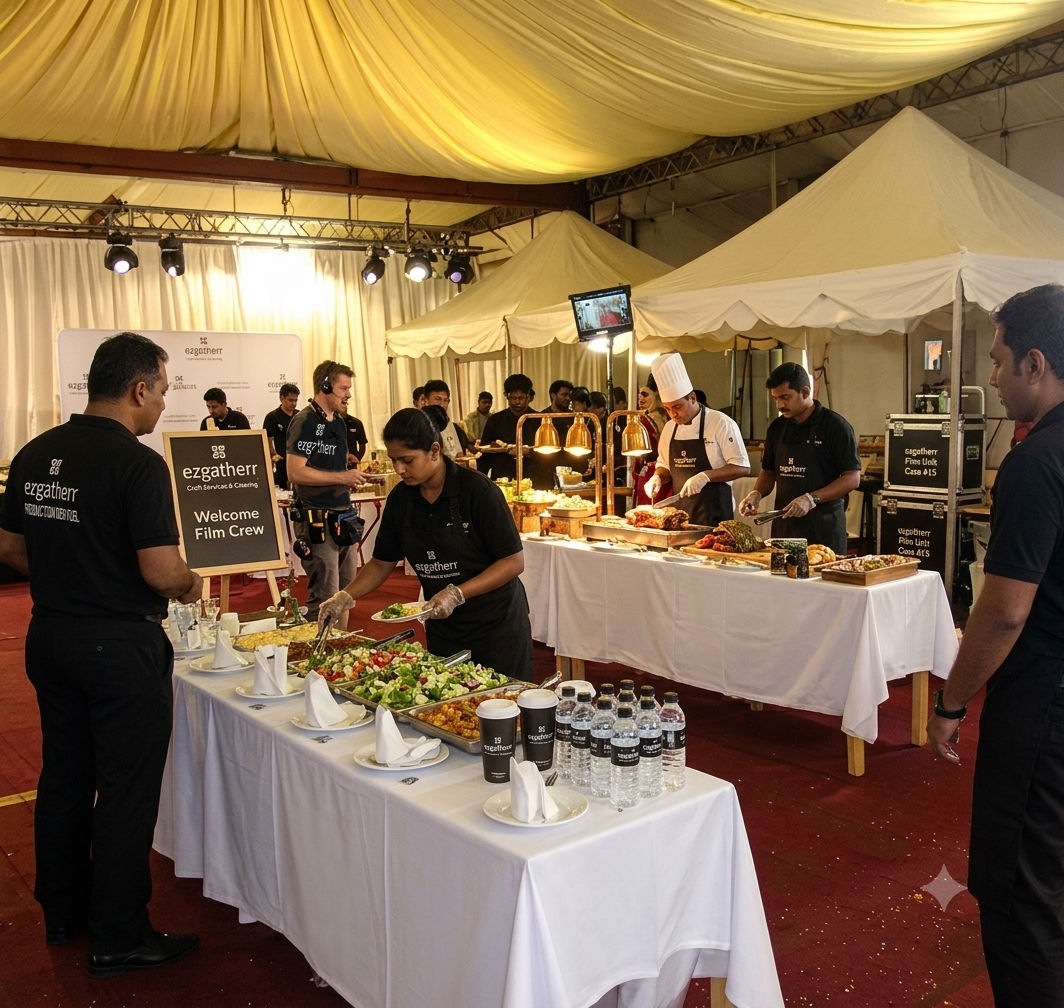
A shoot day does not keep office hours. Call time may be 5 AM, lunch happens whenever the scene allows and the wrap can slide by three hours without warning. Through all of it, thirty or sixty or a hundred people need to be fed, on time and well, in a place that was never designed for eating.
Bangalore sees a steady flow of ad films, corporate videos, web content, music videos, photo shoots and feature schedules. Whether you are a line producer on a commercial or a marketing manager organising a brand shoot for the first time, food is one of the details that keeps a unit running. This guide explains how film catering works for crews and how to plan it.
Why Food Matters So Much on Set
- Days are long. Twelve-hour shifts are common. Hungry crews slow down.
- Time is expensive. Every delayed break costs money in equipment, location and talent.
- Morale is fragile. A good meal lifts a tired unit. A poor one is talked about all day.
- People cannot leave. Locations are often far from restaurants, and nobody can step out mid-shoot.
- Crews remember. Technicians work across productions, and a shoot that fed them properly is one they are glad to return to.
The Meals in a Shoot Day
A full day typically has four food moments.
Breakfast. Served at or just after call time. It must be ready when the first crew members arrive, often before sunrise.
Lunch. The main meal, called at a break in the schedule. Timing is set by the assistant director and can move.
Evening tea and snacks. A short pause late in the afternoon.
Dinner. Only if the shoot runs into the night.
Alongside these, a running supply of tea, coffee, water and light bites, often called craft service, keeps people going between meals.
What to Serve
Breakfast
Hot, filling and quick to eat standing.
- Idli, vada and pongal with chutney and sambar
- Upma or poha
- Bread, butter and eggs for those who prefer them
- Bananas and seasonal fruit
- Tea and coffee in quantity
Lunch
Substantial without being heavy. A drowsy crew after lunch is a real problem.
- Rice with dal or sambar
- One or two vegetable dishes
- A chicken or egg dish for non-vegetarians
- Chapati or paratha
- Curd or buttermilk
- A simple sweet
Many units appreciate a home-style meal over rich restaurant food, particularly on multi-day schedules.
Evening snacks
- Samosa, bajji or bonda
- Sandwiches or puffs
- Biscuits
- Tea and coffee
Running supplies
- Drinking water, always
- Tea and coffee
- Fruit, biscuits and nuts
- Buttermilk or lime juice on hot days
Planning for Different People on Set
A unit is not one group. Requirements vary.
- Crew need quantity, speed and familiar food.
- Talent may have specific dietary routines. Ask their team in advance.
- Directors, clients and agency teams on a commercial often eat separately and may expect a slightly more refined meal.
- Drivers, security and support staff must be counted in the headcount.
Collect dietary needs from department heads the day before: vegetarian, non-vegetarian, Jain, vegan and any allergies.
Formats That Work on Location
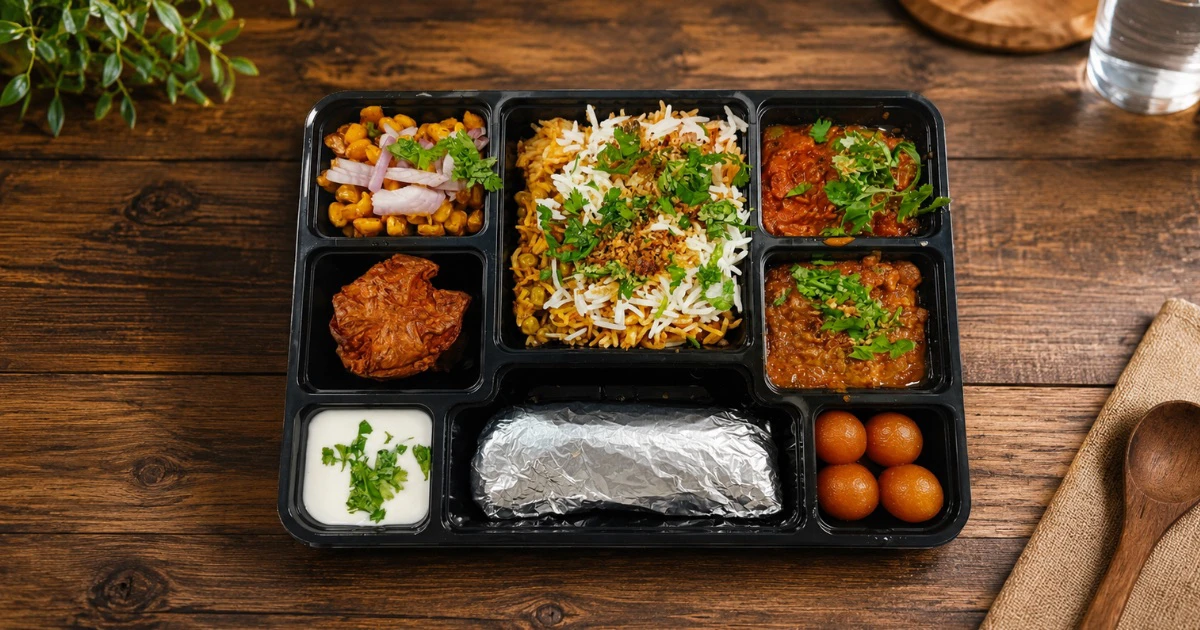
Individual meal boxes. The fastest format. Everyone collects a box and returns to work. Boxes suit small units, tight schedules and locations with no space for a counter. They are also hygienic outdoors.
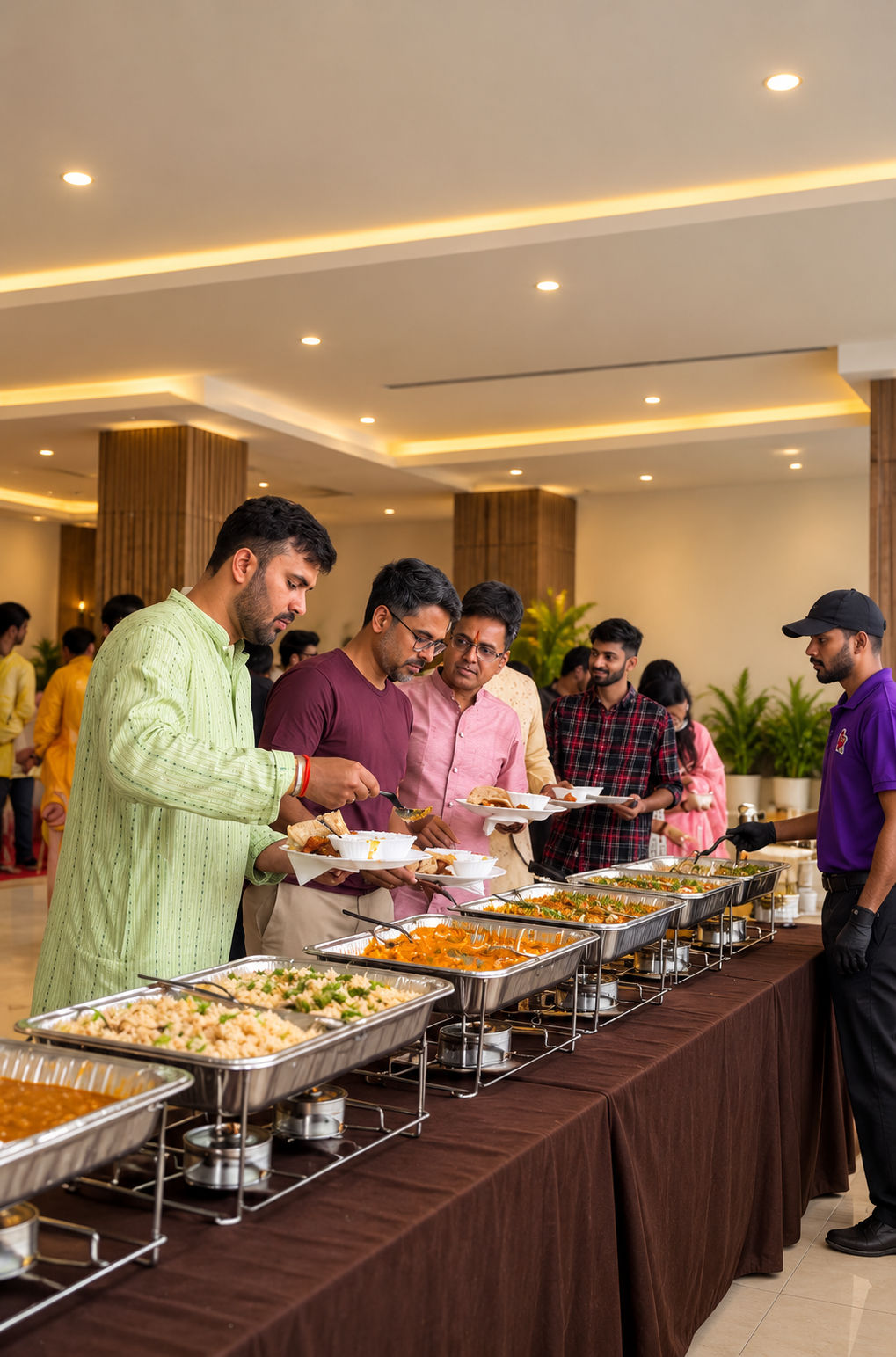
Bulk trays. Food is delivered in large containers and served by a production assistant or a hired helper. This suits mid-sized units and gives people the option of second helpings.
On-site kitchen. Large feature units use caterers who cook on location with a mobile kitchen. This is a specialist service suited to schedules of many days and hundreds of people.
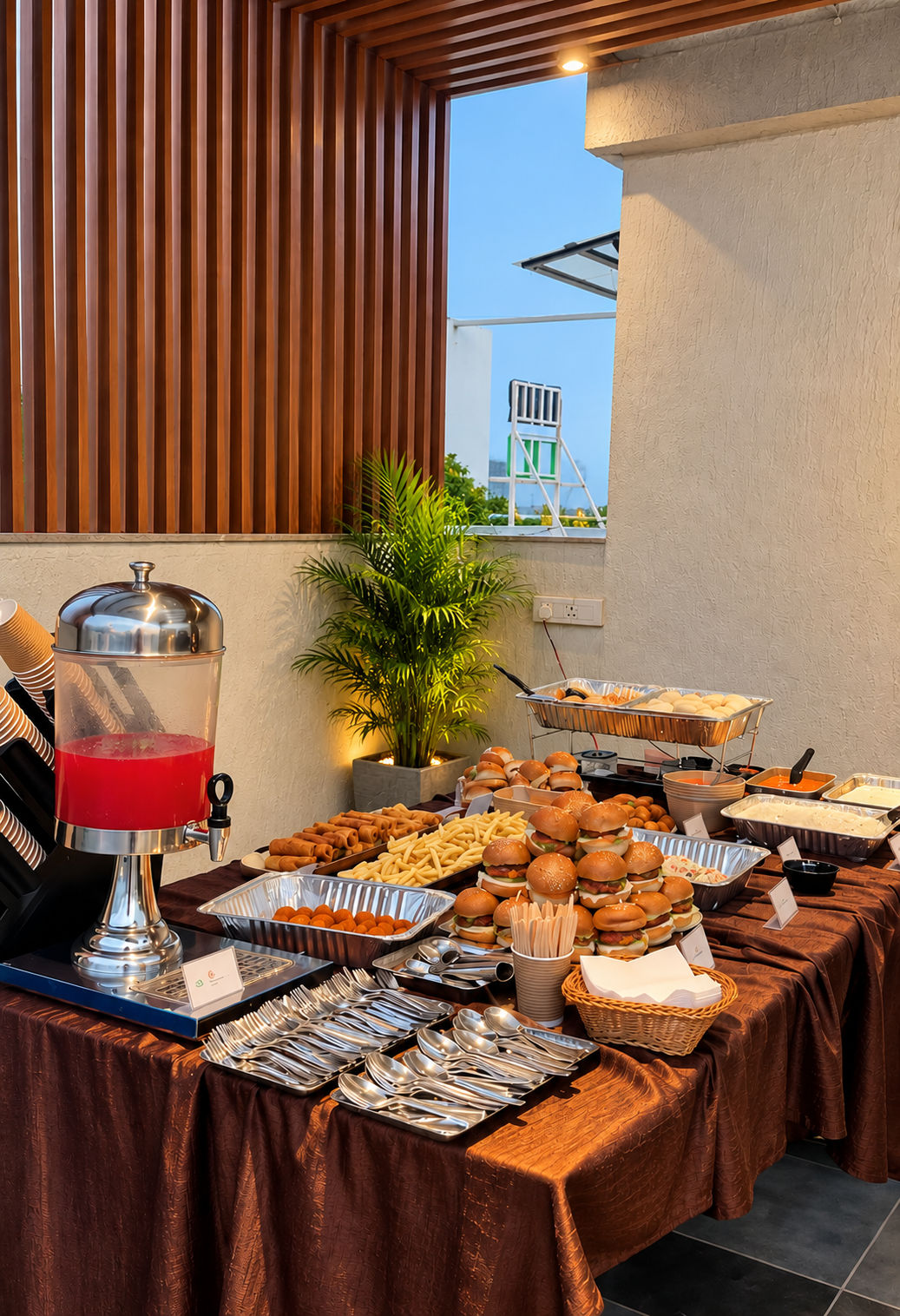
For ad films, corporate shoots and smaller productions, delivered boxes or trays are usually the practical choice. EZGatherr's Gather Box delivers bulk food with plates and cutlery for groups from 10 to 1,000, and its Gather Bento meal boxes are individually packed with cutlery. Both come with GST invoicing. EZGatherr is a delivered-food and event catering service, so check with the team about early-morning timings and your specific location before planning around it.
The Location Checklist
Every location is different. Sort these out before the shoot.
- Exact address and pin. Locations change at short notice. Send updates immediately.
- Access. Can a delivery vehicle reach the unit base? Is there a gate, a guard or a permit?
- Serving area. A shaded, clean spot away from equipment, cables and the frame.
- Seating. Even a few chairs or mats make a difference.
- Hand washing. Water and soap, or sanitiser at least.
- Waste. Bins and bags, and a plan to carry rubbish away. Location owners notice.
- Silence. If sync sound is being recorded, serving and clearing must be quiet or timed with breaks.
- Contact. One production person who will receive the food and one backup.
Timing: The Hard Part
Schedules slip. Plan for it.
- Tell the caterer the planned meal time and the earliest it could be.
- Ask for delivery thirty to forty-five minutes ahead so the food is waiting for the unit, not the other way round.
- Keep food covered and in insulated containers until the break is called.
- If lunch is likely to be late, choose dishes that hold well. Rice dishes, dals and dry vegetables are forgiving. Fried items are not.
- For very early calls, confirm that the provider can deliver at that hour. Not every caterer can.
Food Safety Outdoors
Heat, dust and long holding times raise the risk.
- Keep hot food hot and covered.
- Serve within a reasonable time of delivery. Do not hold lunch for hours in the sun.
- Use sealed boxes where the location is dusty or windy.
- Provide safe drinking water. Do not rely on the location's supply.
- Avoid dishes that spoil quickly in warm weather.
- Make sure servers use ladles and gloves.
Budgeting Crew Food
Production budgets treat food as a per-head daily cost.
- Count everyone: crew, cast, client, agency, drivers and location staff.
- Decide how many meals the day includes.
- Choose the format. Boxes and trays cost less than a staffed or on-site service.
- Keep a buffer of about 10 percent. Units grow on the day.
At the time of writing, EZGatherr lists bulk food from ₹249 per person and meal boxes from ₹149 per box. Confirm current pricing and minimums for your order.
Multi-Day Shoots
- Rotate the menu daily. The same lunch three days running wears a crew down.
- Ask for feedback after day one and adjust.
- Share the full schedule with the caterer, including location changes.
- Settle billing terms in advance.
Read More
- Bulk food delivery in Bangalore
- Meal box delivery in Bangalore
- Corporate catering in Bangalore
- How to Plan Bulk Food Orders for Events
- What Does a Caterer Do? Complete Catering Guide
Planning something similar? See our film catering in Bangalore.