Corporate Events Catering: How to Plan Food for a Full-Day Conference or Seminar
Plan corporate events catering for a full-day conference, from welcome tea and breaks to lunch flow, dietary needs and venue checks.
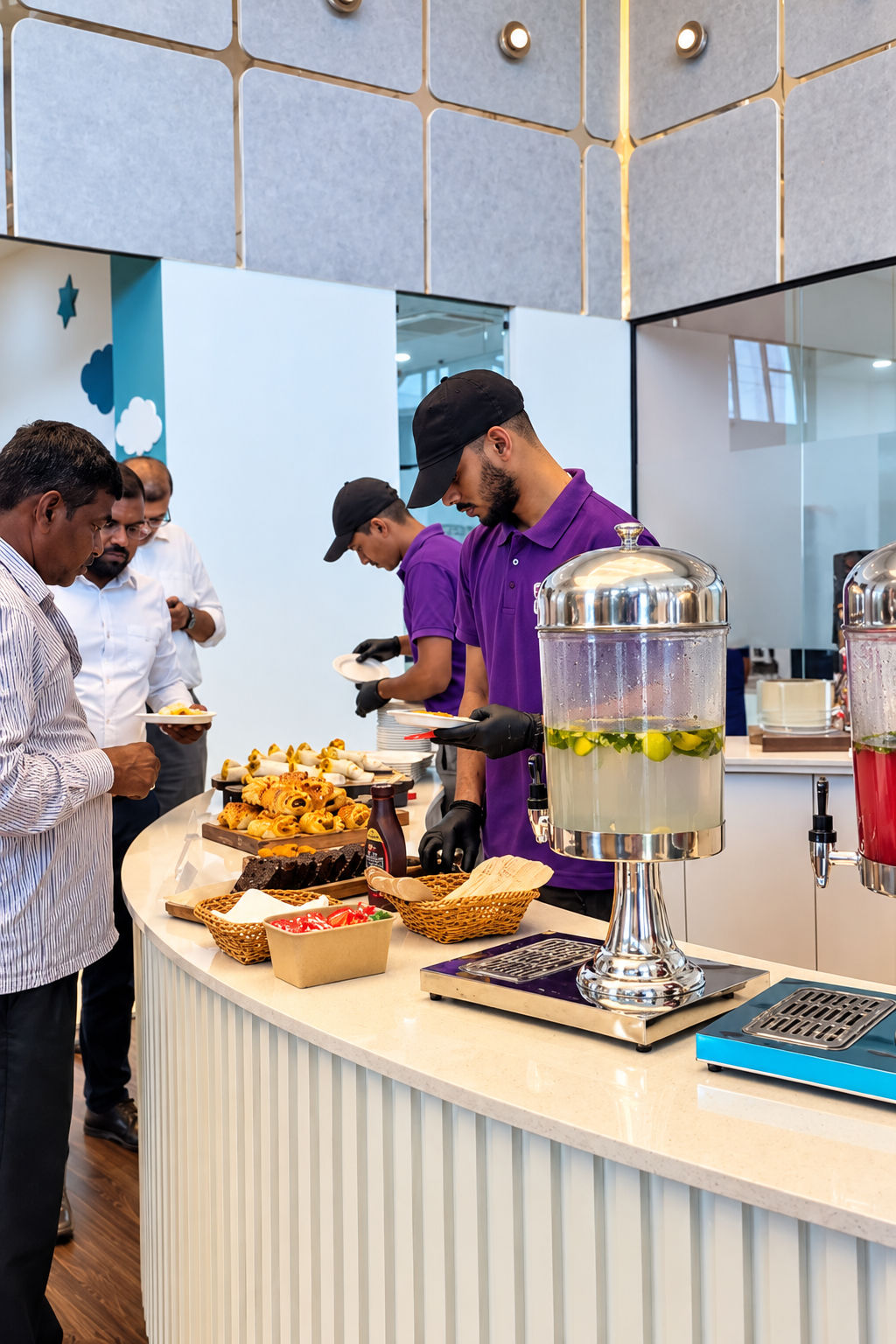
A full-day conference is a long time to hold a room's attention. Speakers, slides and breakout sessions do most of that work, but food does more than organisers tend to credit. A good morning tea wakes the room. A lunch that runs to time keeps the agenda intact. A well-judged afternoon snack rescues the 3:30 PM slump.
Get the food wrong and everything else suffers. Queues spill into the next session, attendees wander off to find coffee and the feedback forms mention lunch before they mention the keynote. This guide sets out how to plan corporate events catering for a conference, seminar, offsite or training day from the first arrival to the closing tea.
Start With the Agenda, Not the Menu
Food at a conference serves the schedule. Before discussing dishes, mark every food moment on the agenda with its start time, its duration and where it happens. A typical day has five.
- Registration and welcome refreshments
- Mid-morning tea break
- Lunch
- Afternoon tea break
- Closing refreshments or networking
Share this schedule with your caterer first. It tells them how many services to plan, how fast each must be and how much staff is needed.
The Five Food Moments
Registration (30 to 45 minutes before the first session)
Attendees arrive in ones and twos, often without breakfast.
Serve: tea, coffee, water and something light such as cookies, small sandwiches, muffins or a South Indian option like mini idlis or upma cups.
Tips
- Place the refreshment table away from the registration desk so the two queues do not merge.
- Keep items that can be eaten standing with one hand.
- Start service before the first attendee arrives.
Mid-morning break (15 to 20 minutes)
This is the shortest and most pressured service of the day.
Serve: tea, coffee and one or two bite-sized items.
Tips
- For 100 or more people, set up at least two beverage points.
- Have everything ready five minutes before the session ends.
- Avoid anything that needs a plate and fork.
Lunch (45 to 60 minutes)
Lunch is the main event and the biggest risk to the timetable.
Choosing a format
- Buffet. Offers choice and suits networking. It needs enough counters to get everyone through quickly.
- Meal boxes. The fastest option. Everyone collects a box and sits wherever there is space. Ideal when lunch is short or the venue has no dining area.
- Seated service. Suits small leadership events. Too slow for large groups.
Menu guidance
- Keep it moderate. A heavy lunch produces a drowsy afternoon audience.
- Offer two or three mains, a rice, a bread, a salad or raita and one dessert.
- Include a strong vegetarian selection and label every dish.
- Avoid very oily or very spicy food.
Flow
- Plan one buffet line for roughly every 75 to 100 guests, or use double-sided counters.
- Stagger release by row or session where possible.
- Place plates at the start of the line and cutlery at the end.
- Keep water stations separate from the food line.
Afternoon break (15 to 20 minutes)
Energy dips after lunch. This break is about revival.
Serve: tea, coffee and a savoury snack. Samosas, cutlets, sandwiches or a chaat-style item work well. Fruit is a welcome addition.
Closing or networking (30 to 60 minutes)
If the event ends with networking, light passed snacks and beverages keep people in the room. For an evening reception, a starters-led menu is enough. A full dinner is only necessary if the programme continues late.
Planning by Event Size
Up to 50 attendees. A single buffet line or meal boxes. One beverage station. Two or three service staff for a buffet.
50 to 200 attendees. Two buffet lines or boxes. Two beverage stations. A coordinator from the catering team on site.
200 and above. Multiple counters, separate vegetarian and non-vegetarian lines and several beverage points. Hold a walk-through of the venue with the caterer beforehand.
Dietary Requirements
A corporate audience is diverse, and getting this right is noticed.
- Add a dietary question to the registration form: vegetarian, non-vegetarian, vegan, Jain, allergies.
- Share the totals with the caterer at least three days ahead.
- Label dishes with a vegetarian or non-vegetarian marker and note common allergens.
- Keep special meals aside with the attendee's name.
- Brief the service staff so they can answer questions.
Count Everyone, Not Just Delegates
The registered attendee list is never the full headcount. Speakers, panel moderators, the audio-visual crew, photographers, registration desk volunteers, sponsors' booth staff and your own organising team all need to eat, and they often eat at different times from the audience.
- Add them to the lunch count explicitly.
- Set aside boxes or a separate table for crew who cannot leave their posts.
- Keep refreshments in the speakers' room.
- Ask the caterer to hold back a small quantity for people who finish their duties late.
A fed crew is a cheerful crew, and it shows in how the day runs.
Venue Checks
Hotels have their own kitchens. Many other venues do not, and outside catering needs preparation.
- Is outside catering allowed? Some venues charge a fee or forbid it.
- Where will food be served? A foyer, a separate hall or the back of the room.
- Is there a pantry or holding area?
- Are power points available for beverage dispensers and warmers?
- What is the access route for a delivery vehicle and equipment?
- Who clears the waste?
For an event inside your own office, book the cafeteria or a large meeting room for service and inform facilities and security in advance.
A Sample Timeline for the Organiser
Four weeks before: confirm the agenda and expected attendance. Request quotes.
Two weeks before: finalise the menu for each service. Send the registration form with a dietary question.
One week before: share the venue layout and access details with the caterer.
Three days before: confirm final numbers and special meals.
One day before: reconfirm arrival times and the on-site contact.
Event day: meet the catering lead, walk through the service points and agree a signal for opening each service.
Formats on EZGatherr
For conferences and seminars, the relevant options are:
- Gather Bento meal and snack boxes for lunch and tea breaks. Boxes are sealed, include cutlery, and are listed with a minimum of 10 boxes and delivery by 12:30 PM.
- Gather Feast staffed buffet, which includes food, service staff, cutlery, crockery and setup.
- Gather Box bulk trays for smaller workshops where the group serves itself.
For tea-break menus, the page on hi-tea party catering in Bangalore is a useful reference.
Mistakes That Derail Conference Catering
- Planning lunch for the invited number instead of registered attendees
- One buffet line for 200 people
- No dietary information collected
- Tea served only after the session has broken, creating a rush
- Heavy menus that flatten the afternoon
- No water in the session halls
- Forgetting speakers, crew and volunteers in the headcount
Frequently Asked Questions
Are meal boxes or a buffet better for conference lunch?
Boxes are faster and suit tight schedules. A buffet offers choice and works when there is time and space.
How many tea breaks should a full-day event have?
Two, one mid-morning and one mid-afternoon, plus welcome refreshments.
How long should conference lunch be?
Allow 45 to 60 minutes, depending on headcount and the number of counters.
How do I handle dietary requirements?
Collect them at registration, share them with the caterer in advance and label food on the day.
How far ahead should I book?
Two to four weeks for most events, and longer for very large gatherings.
Read More
- Corporate party catering in Bangalore
- Corporate catering in Bangalore
- Hi-tea party catering in Bangalore
- Different Types of Catering Services Explained
- How to Plan Bulk Food Orders for Events
Planning something similar? See our corporate event catering in Bangalore and corporate catering in Bangalore.
Author
Get Stories and special offers delivered Right to your Inbox
Frequently
asked questions
How do I place an order on EZGatherr?
You can browse menus and services, select your requirements, and place an order directly through the platform. Our team may connect with you to finalize details.
Is there a minimum order requirement?
We dont have the concept of Minimum order quantities however we do have Minimum order value which is INR3000/-
How early should I book my event?
We recommend booking at least 2days in advance for small catering events however all delivery orders can be booked a day prior. Pooja & Event services should be booked 3days in advance.
Can I customize the menu or services?
Yes, we offer flexibility to customize menus, portion sizes, and service inclusions based on your preferences.
When is my order confirmed
Your order is confirmed once the required advance payment is completed and you receive a booking confirmation from our team.