Catering Services in Bangalore for Apartment Communities: A Residents' Welfare Secretary's Story
A welfare secretary's story of festival lunches, clubhouse limits and headcount trouble, with tips for choosing catering services in Bangalore.


Rajesh did not apply to be the secretary of his apartment association in Sarjapur Road. He was nominated at a general body meeting while he was away getting tea. Eighteen months later he has organised two Diwali evenings, an Onam lunch, a Christmas potluck, a children's day party and a clubhouse farewell for a retiring security guard. The one thing that surprised him most was how much of the job is food.
This is a composite story built from what community committees commonly describe. If you are the person your neighbours turn to when a community event needs catering services in Bangalore, Rajesh's lessons may save you a few difficult WhatsApp threads.
The First Event: Everyone Eats, Nobody Agrees
The first festival lunch had 220 residents on the guest list. The committee's debate lasted three evenings. Half wanted a vegetarian menu only, so everyone could eat together. Others wanted at least one non-vegetarian dish. A few asked for Jain food. A senior couple asked for low-oil, low-salt meals.
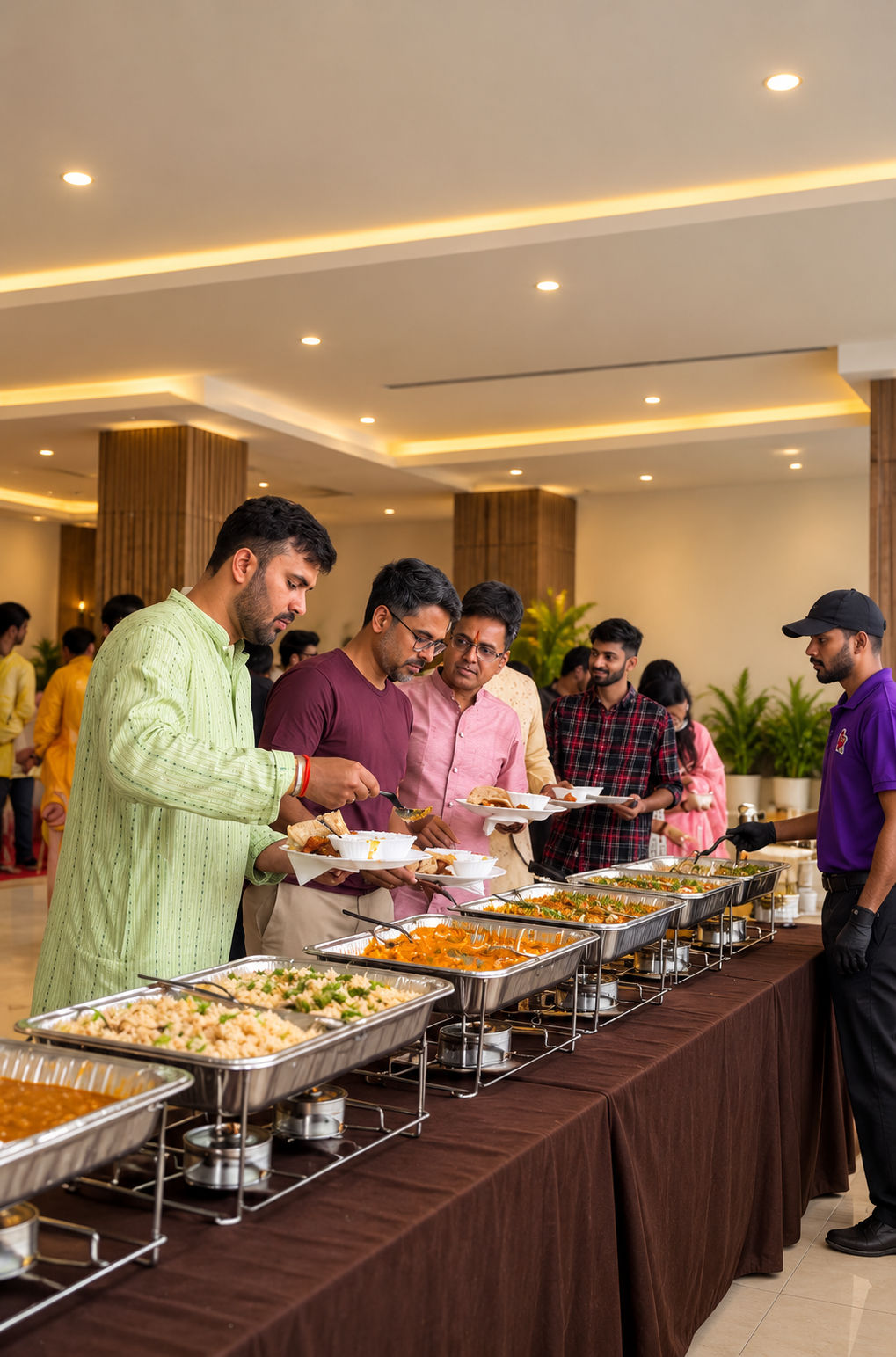
Rajesh's resolution became a rule for later events: start with the most restrictive guest and build outward. A strong vegetarian menu forms the base. Jain and no-onion-no-garlic dishes are prepared separately and labelled. Non-vegetarian items, if included, are served from a separate counter, clearly marked. Everyone can eat at the same table, and nobody is forced to compromise.
Collecting a Headcount from 220 Homes
Apartment events have an unusual problem. People say they will come and do not, or say they will not and appear with guests. For the first lunch, the committee had a rough guess and ended up with food for 40 people too many.
By the third event, Rajesh used a simple method:
- Open a sign-up form two weeks before, with adults and children counted separately.
- Ask for dietary preferences at sign-up.
- Close sign-ups five days ahead.
- Confirm final numbers with the caterer three days ahead.
- Add around 10 percent for walk-ins.
It is not perfect, but it reduced waste significantly, and it let the committee give the caterer firm numbers early.
Money: Who Pays and How
Community events raise a delicate question. Do residents pay per head, does the association fund it, or is it shared? Rajesh found that clarity mattered more than the model. Printed on the invite were the cost per adult, the cost per child and what it covered.
When comparing vendors, he asked each to provide a one-page quote with the same structure: menu, quantity, per-plate price, staff, crockery, transport and GST. Quotes that did not match the structure were sent back. It made comparison a five-minute task.
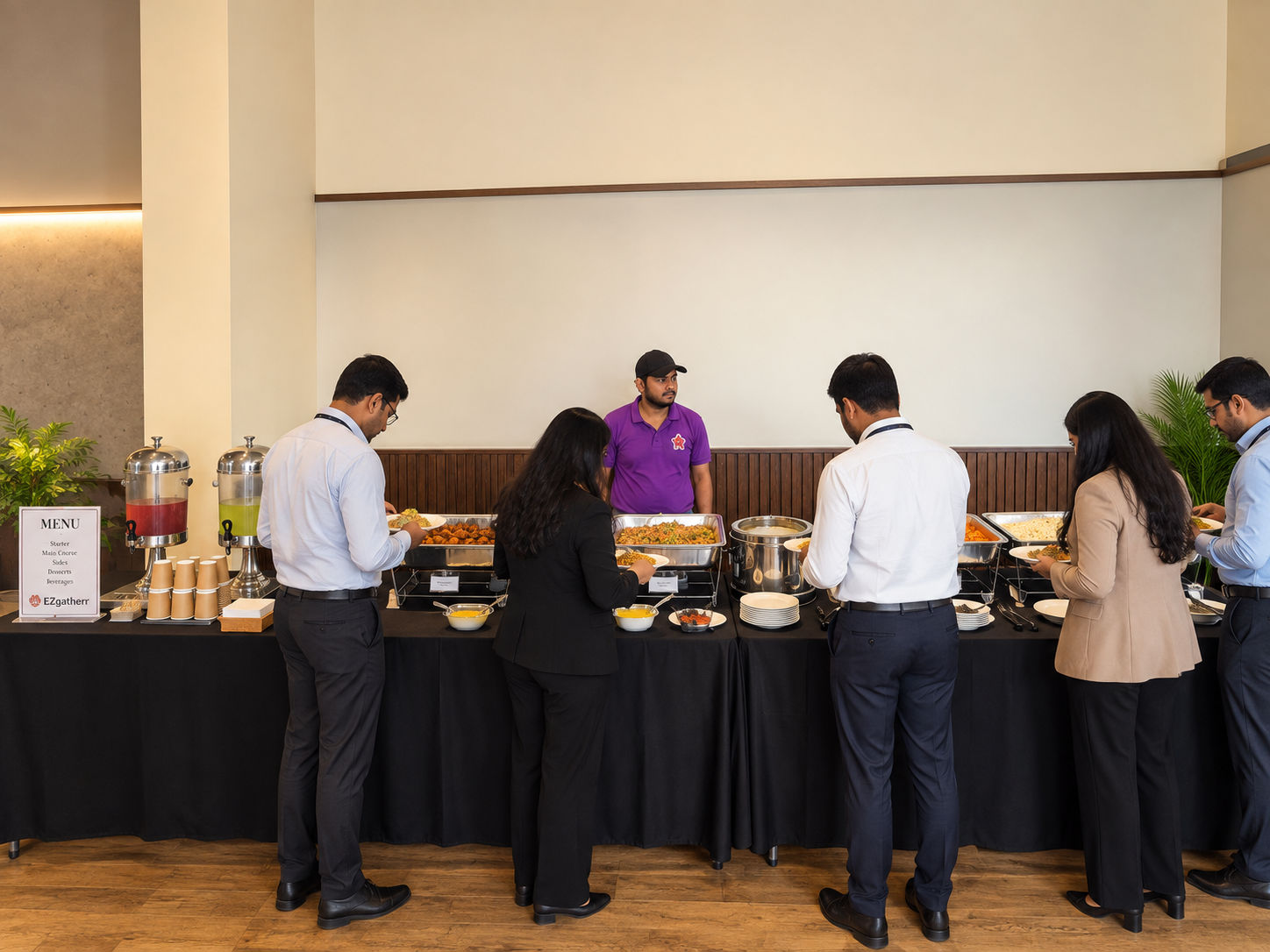
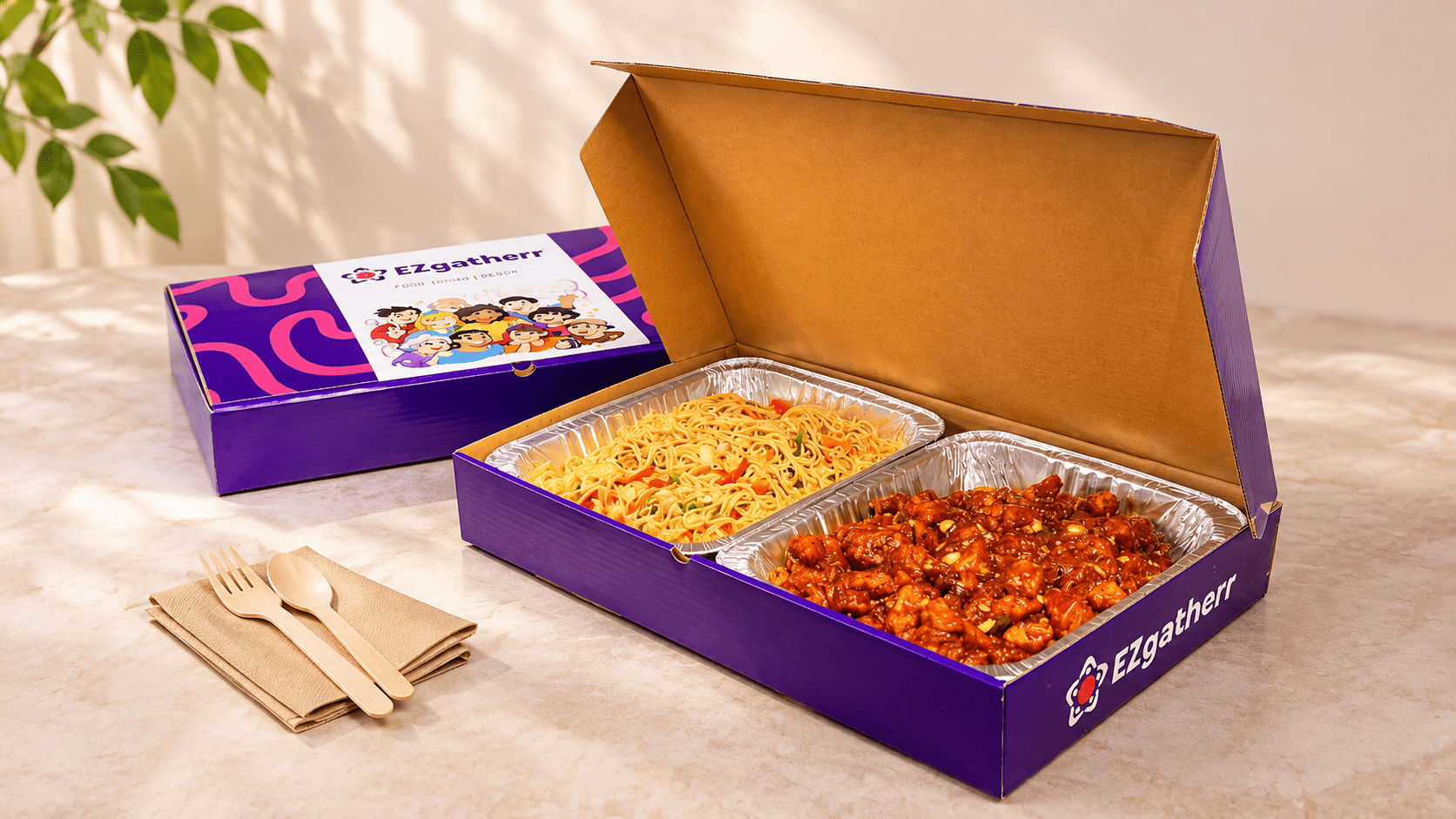
At the time of writing, EZGatherr lists staffed buffet catering from ₹399 per plate with a minimum of 10 guests, and bulk delivery from ₹249 per person with a minimum order of ₹3,000. These are starting points to calibrate expectations, not guarantees. A community lunch usually lands somewhere above, depending on the menu.
The Clubhouse Is Not a Kitchen
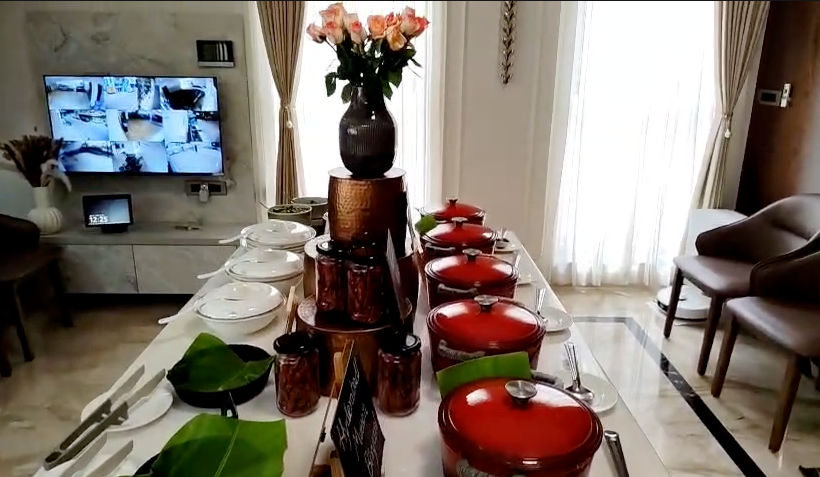
This was the biggest lesson, and the one that surprises first-time organisers. A clubhouse typically has a small pantry, at best. It may not have gas connections, ovens or storage. Some associations also restrict cooking inside the premises.
So ask the following before you pick a caterer:
- Is outside food allowed, and are there timing restrictions? Some associations permit vendor entry only between certain hours.
- Where will vehicles park? Apartment gates are narrow and crowded on event days.
- Can the lift carry equipment? Service lifts matter for chafing dishes and large containers.
- Is power available at the serving area? Warmers and beverage machines draw significant load.
- Who cleans up? Decide whether the vendor, the housekeeping staff or the residents do.
A prepared kitchen is not necessary for a good event. A prepared plan is.
Security, the Unsung Partner
Rajesh's most valuable colleague was the security supervisor. Before each event, he shared the vendor's name, the vehicle numbers and the list of staff entering. Gate passes were issued in advance. The result was that food trucks did not queue outside at 12:45 PM while the guests waited inside.
This sounds mundane. It is the difference between an event that starts at 1 and one that starts at 2.
Children, Elders and the Middle
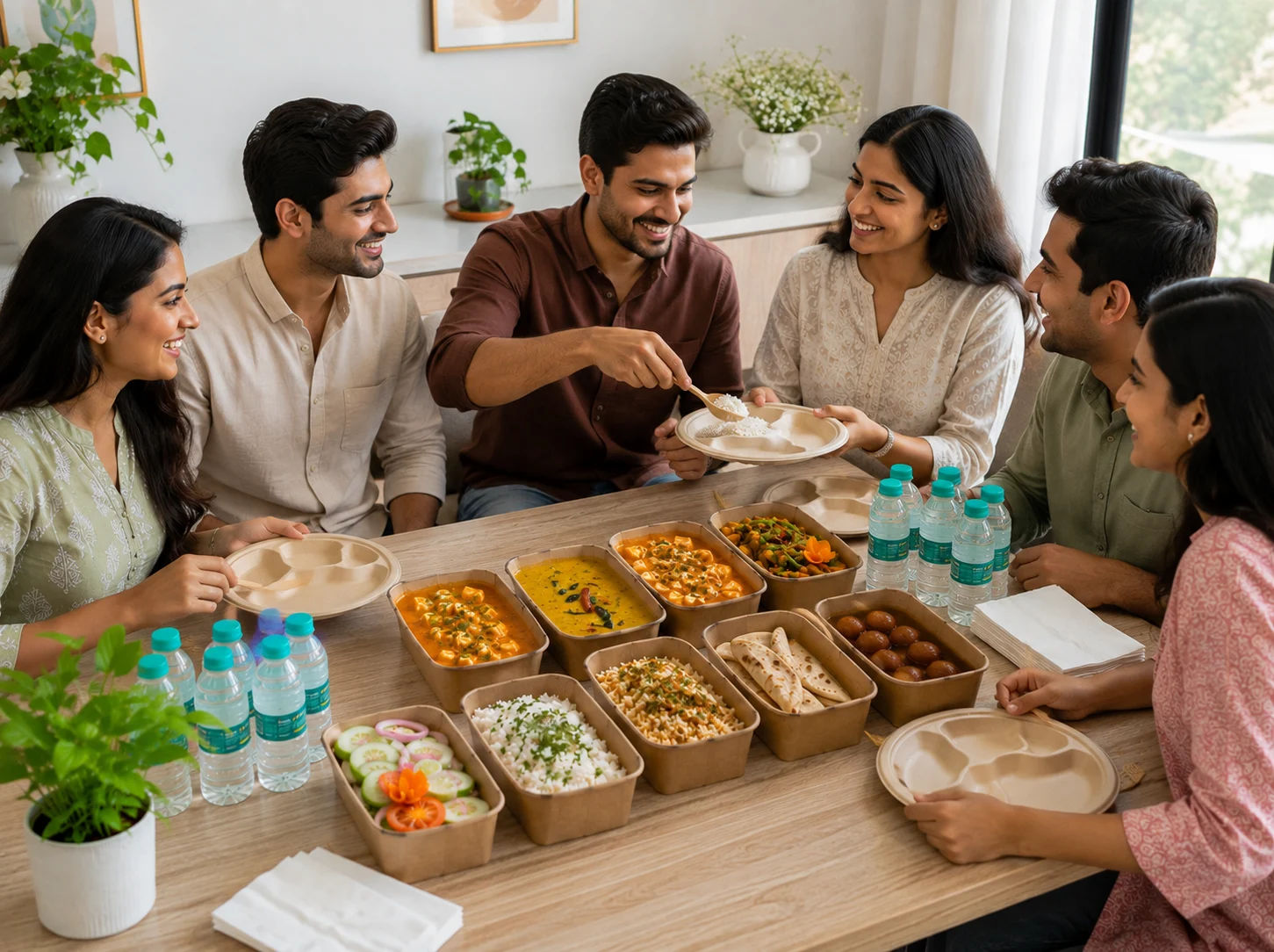
Community events are the only gatherings where a toddler, a teenager, a working parent and an octogenarian share a menu. Rajesh used a three-part approach:
- Children. A simple, mild option such as pulao, fries or a pasta, served first and kept separate from spicy items.
- Elders. Soft, low-spice dishes such as dal and rotis, with staff bringing plates to those who cannot queue.
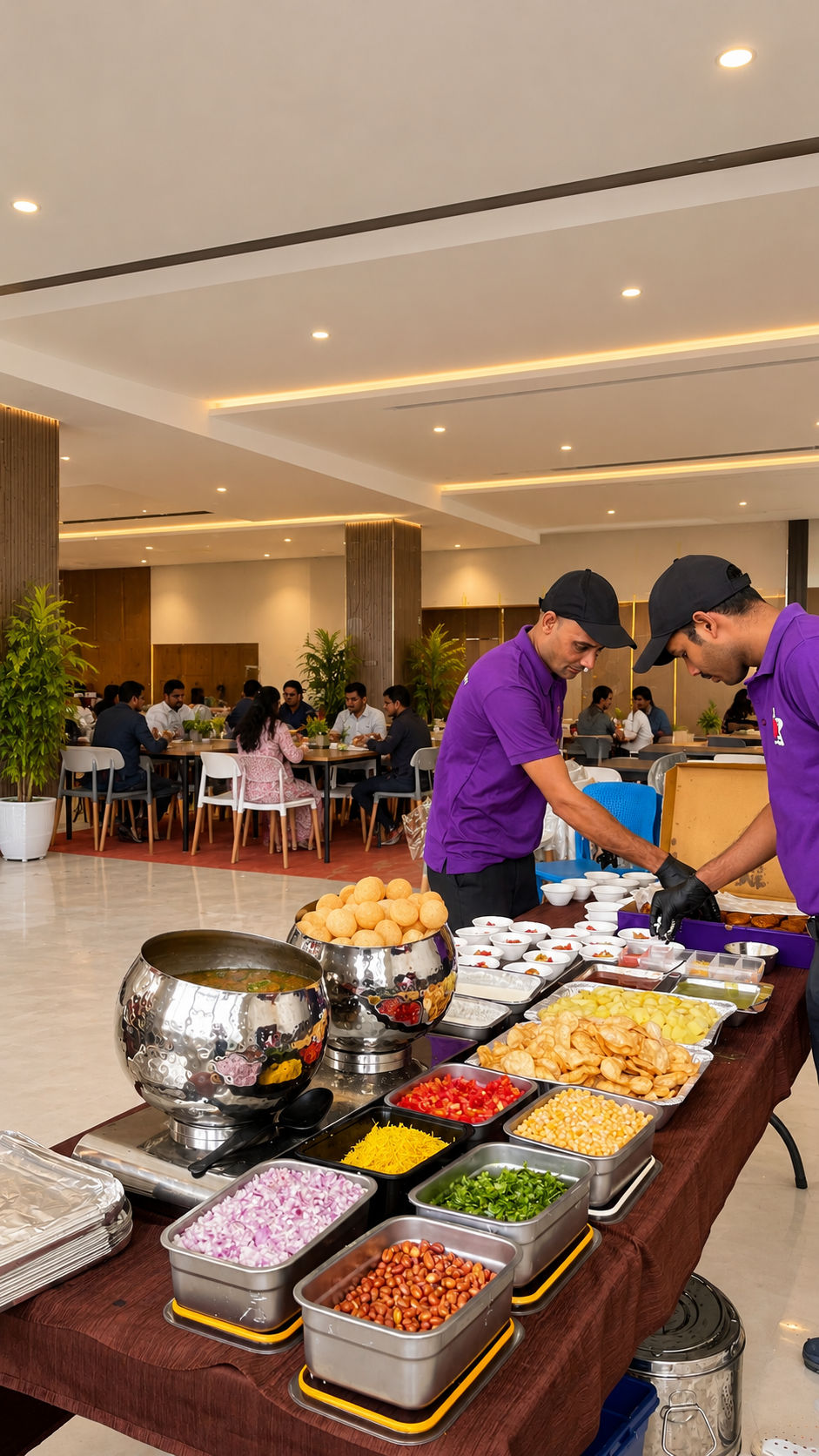
- Everyone else. The main menu, with one standout dish to give the event some personality.
He also learned to place a small water and tea station apart from the food counter, which reduced crowding noticeably.
The Event That Went Best
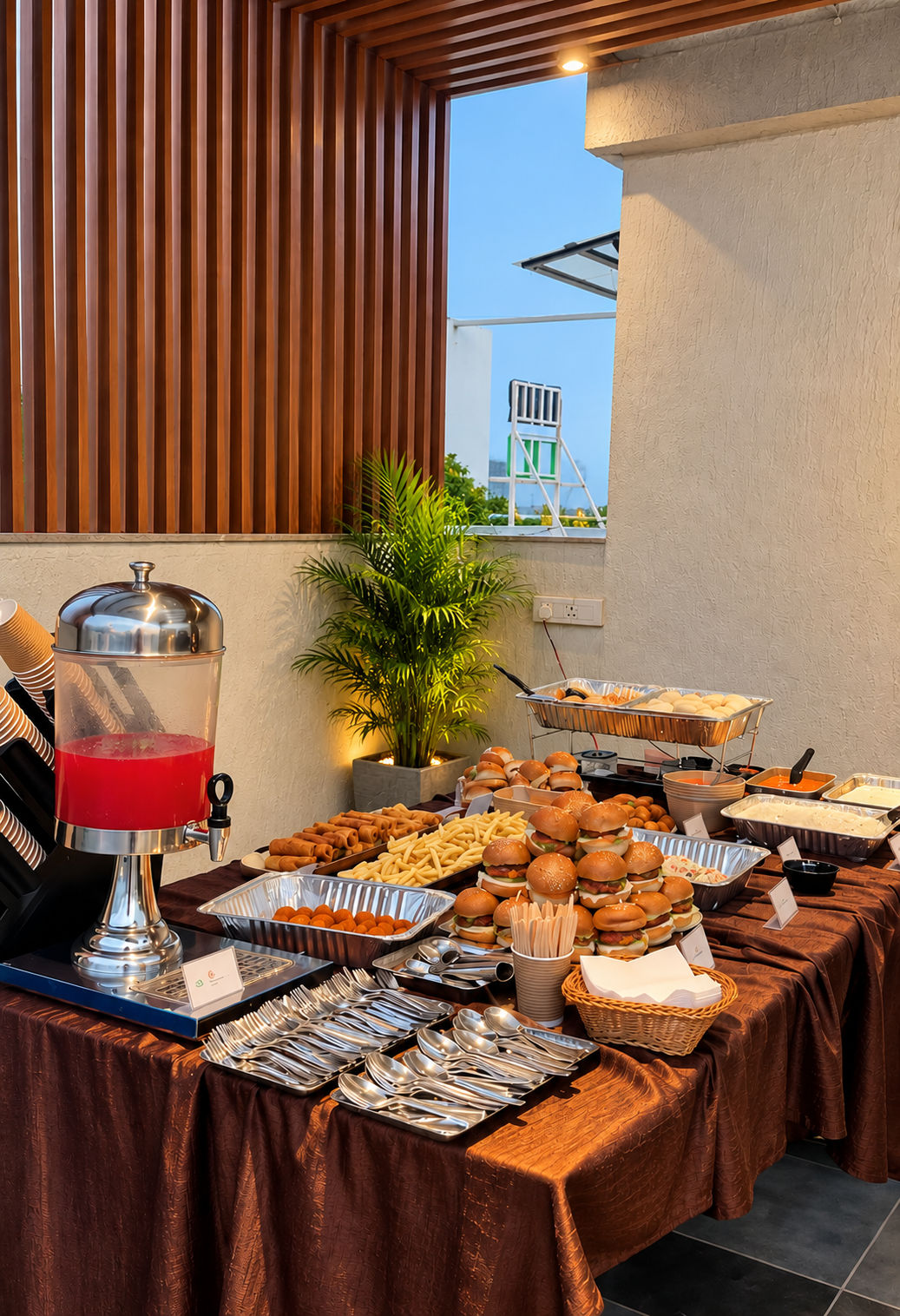
The Onam lunch, he says, was the one he is proudest of. A traditional sadya style menu, served on banana leaves, with a staffed team who knew the order of service. The committee had agreed the menu a month ahead, shared a floor plan with the vendor and held a walk-through the evening before.
What made it work was not luxury but preparation: a clear headcount, a vendor who understood the format, enough serving points and a volunteer for each section. Residents lingered over dessert, which is the sign of a good lunch.
What He Would Tell the Next Secretary
Rajesh's advice to anyone inheriting the role is short.
- Keep a record of every event: headcount, cost, vendor, what worked.
- Rotate vendors lightly, but do not trial a new one at the biggest event.
- Ask for references from other communities.
- Insist on written quotes and a named point of contact.
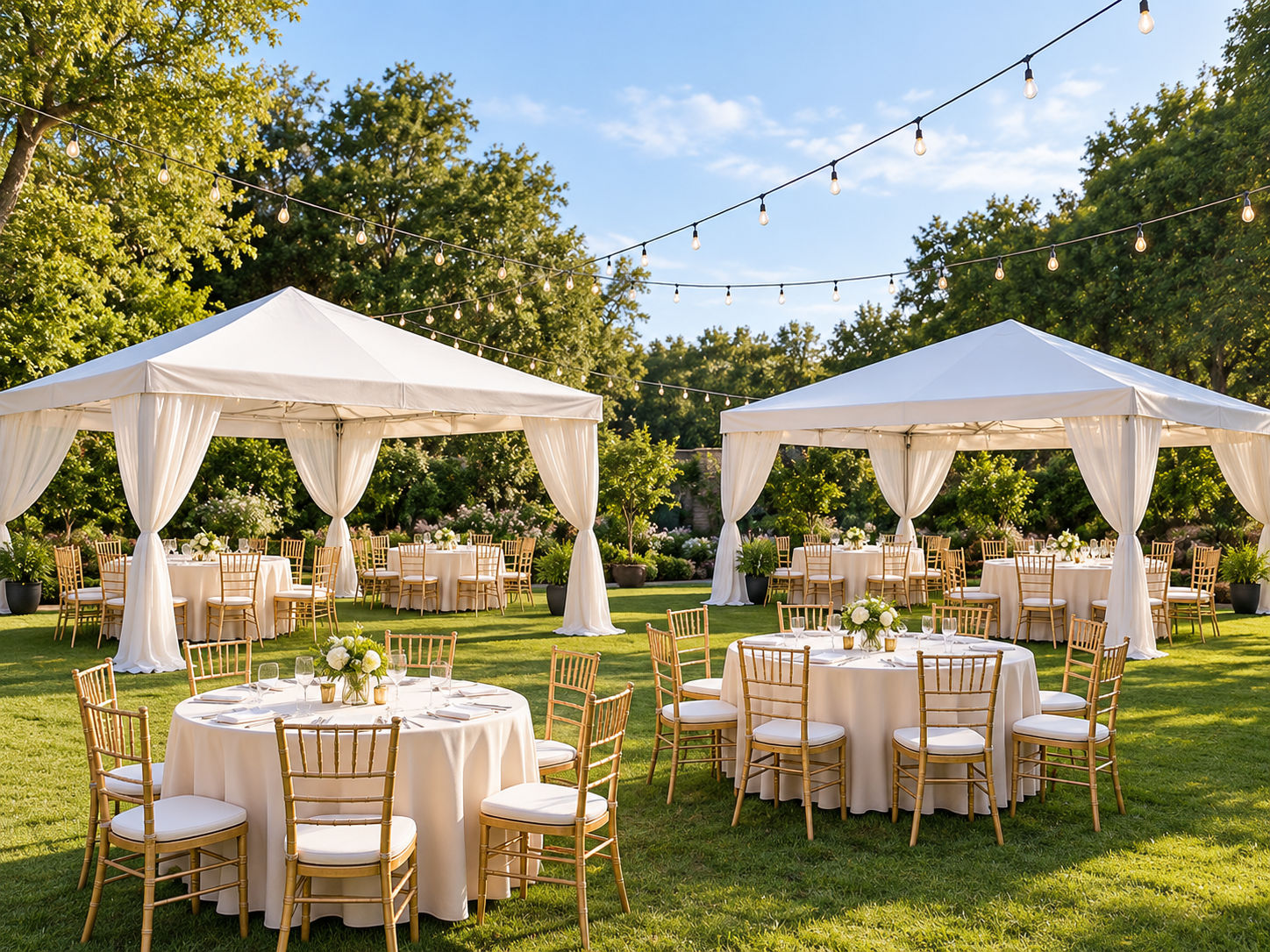
- Plan for rain. Outdoor events need a backup under cover.
- Thank the housekeeping and security teams publicly. They make it work.
Selectingcatering services in Bangalore for a community is as much about trust and logistics as it is about the menu, and the best vendors are the ones who ask about your gate, your lift and your pantry before they quote.
Read More
- Catering services in Bangalore
- Bulk food delivery in Bangalore
- Diwali catering in Bangalore
- Catering services in Sarjapur Road
- How to Plan Bulk Food Orders for Events
Planning something similar? See our catering services in Bangalore and small party catering in Bangalore.
Read more
 Caterers in Bangalore: Menu Stories From Five Very Different Homes
 Caterers in Bangalore: The Five Phone Calls I Made Before Booking My Parents' Anniversary Lunch
 Buffet, Plated or Live Counters: Which Catering Service Style Suits Your Event?
 Catering Services in Bangalore: What a Banquet Manager Wishes Hosts Knew