Wedding Caterers in Bangalore: A Bride's Mother's Diary of Four Functions
A bride's mother's diary of four functions shows how to choose wedding caterers in Bangalore, from tastings to venue walk-throughs.

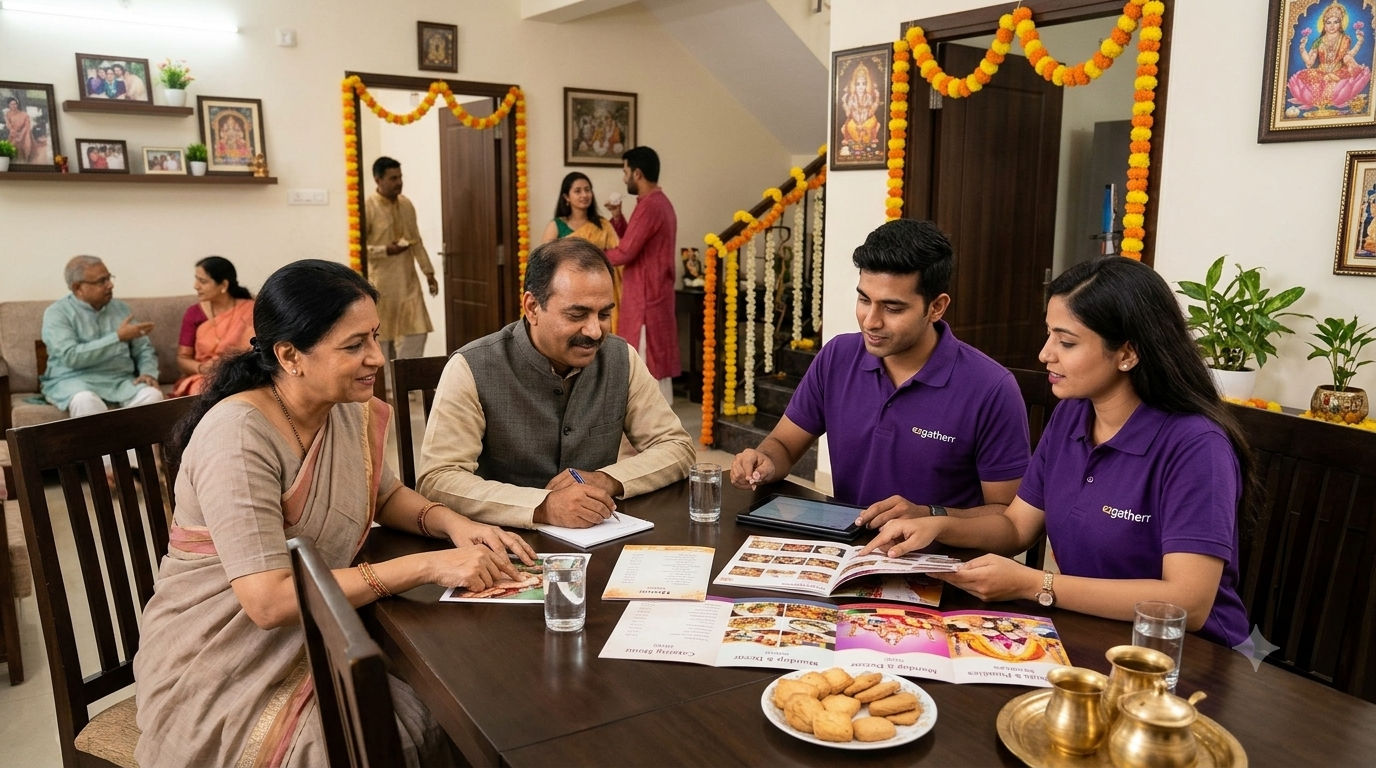
Sujatha began the diary on the day the muhurat was fixed. She is the mother of the bride, a retired schoolteacher in Jayanagar, and she approached her daughter's wedding the way she once approached exam week: with lists. By the end, the diary had grown into forty pages of observations about food, relatives and the quiet logistics of a four-function Indian wedding.
This is a composite account, built from what mothers of brides and grooms commonly tell us. It follows one family's decisions about wedding caterers in Bangalore across four functions, and it is meant to be useful rather than prescriptive. Every family's traditions differ, and the diary reflects one set.
Entry One: Eleven Weeks Before, "Why Is This So Large?"
The first entry is a list of functions, with estimated guests.
- Nischayathartham and lunch: 80 guests, a Sunday.
- Haldi and mehendi: 60 guests, a Thursday afternoon.
- Reception: 400 guests, a Friday evening.
- Muhurtham and lunch: 350 guests, a Saturday morning.
Four functions, four different crowds, four different meals. Sujatha's first lesson was that "wedding catering" is not one event. It is four, each with its own mood, timing and menu.
She also wrote, in the margin: "Ask whether one vendor does all four." It turned out to be one of the most useful questions she asked.
Entry Two: One Caterer or Several?
One vendor means simpler coordination and a team that knows your family by the second function. Several vendors means each does what it does best, at the cost of more briefings. Her family chose one primary vendor for the reception and muhurtham, which were the largest events, and a separate, smaller vendor for the haldi and mehendi afternoon, which needed light snacks and refreshments rather than a full meal.
Entry Three: The Tasting
The tasting happened on a Wednesday evening, with six family members. Sujatha's notes are vivid.
"Six dishes tasted. The paneer was soft but too sweet. The dal was excellent. The biryani rice was perfectly separate. The sweets were good, but the payasam was thin. I told them directly and they said they would adjust. They did not argue. That mattered."
What she looked for:
- Seasoning and balance. Not too rich, not too spicy.
- Texture. Rice that was separate, rotis that were soft.
- The delicate dishes. Paneer, sweets and rice reveal more than dal.
- Response to feedback. She wrote down how the team reacted.
Not every vendor offers tastings for every size of event. It is worth asking, and worth preparing a short list of dishes to taste.
Entry Four: The Menu for the Reception
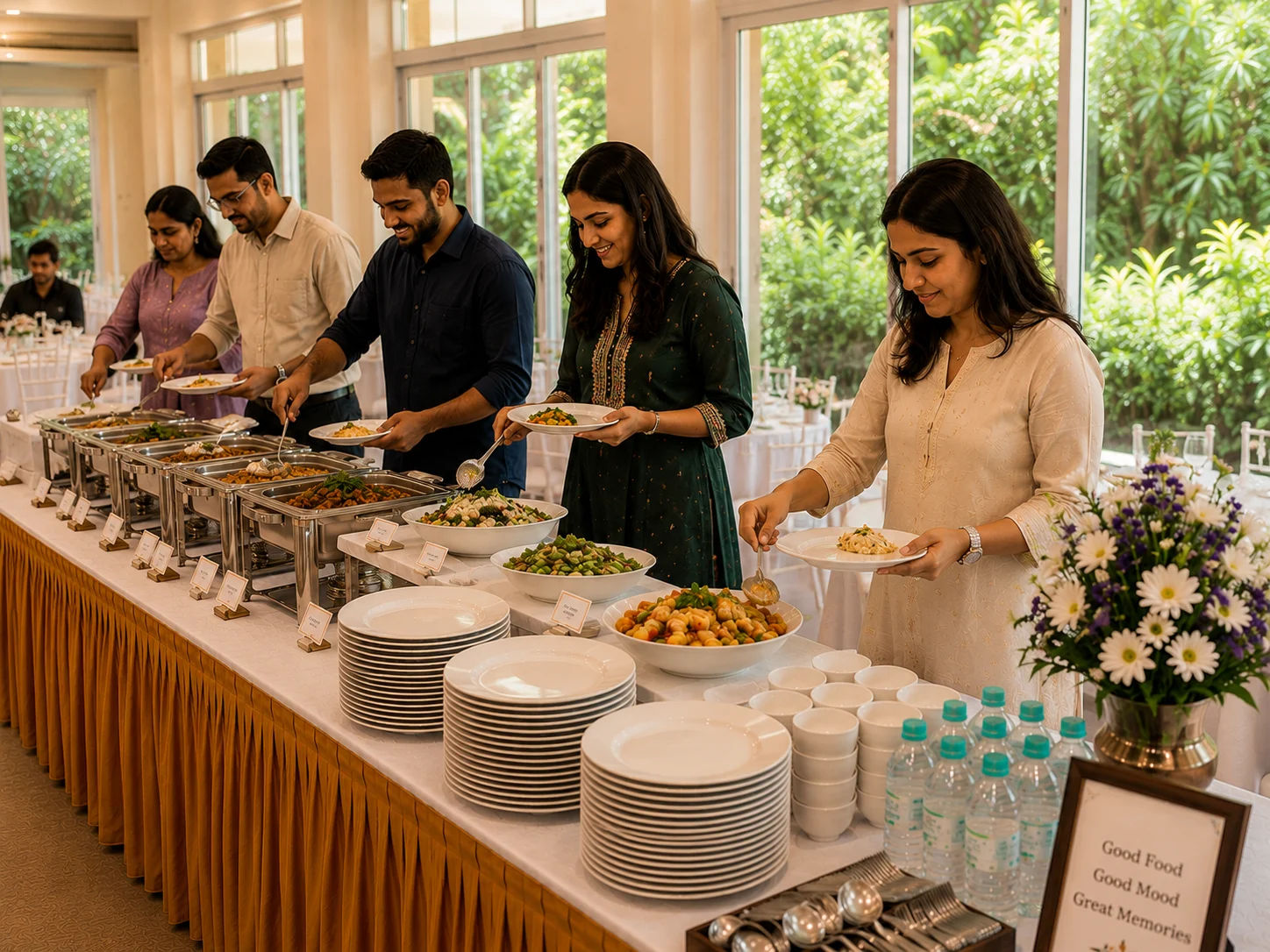
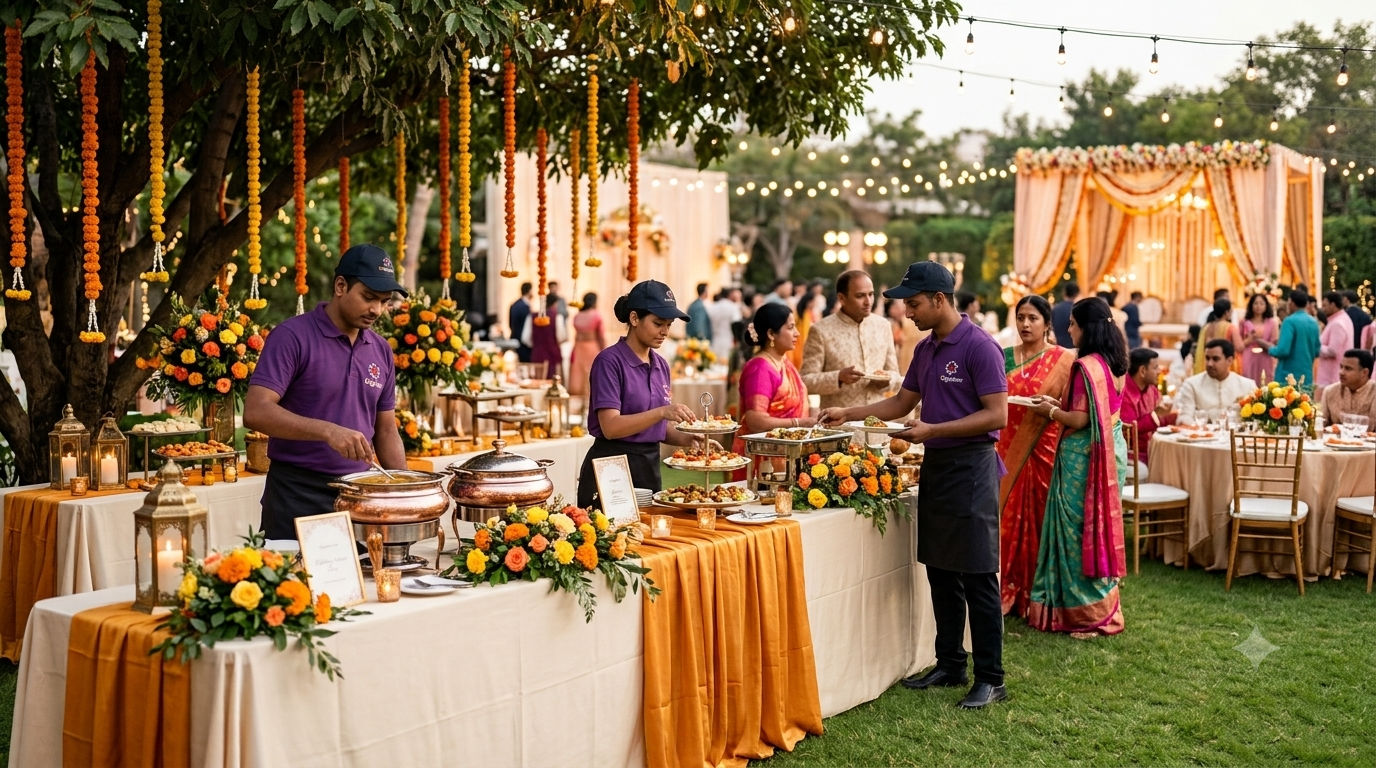
The reception was the largest event, and the most visible. The family wanted a mix of Indian and Continental, with live counters.
Sujatha's final menu, which she copied into the diary, looked like this.
- Welcome drinks: a mocktail and a coconut water station.
- Starters: passed vegetarian and non-vegetarian items, three of each.
- Live counters: chaat, dosa and a pasta station.
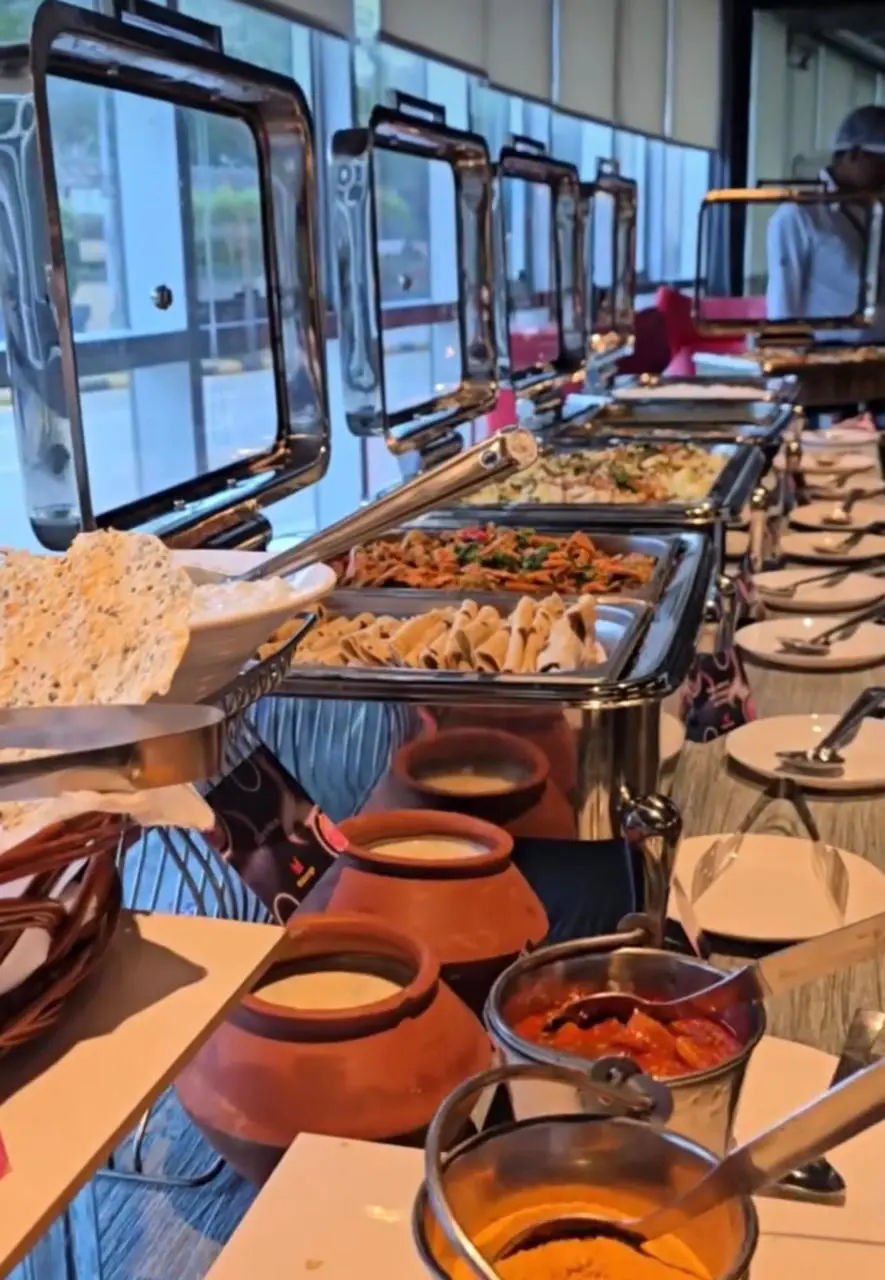
- Main buffet: two dals, three vegetable dishes, a paneer dish, two chicken dishes, biryani, rice, breads and accompaniments.
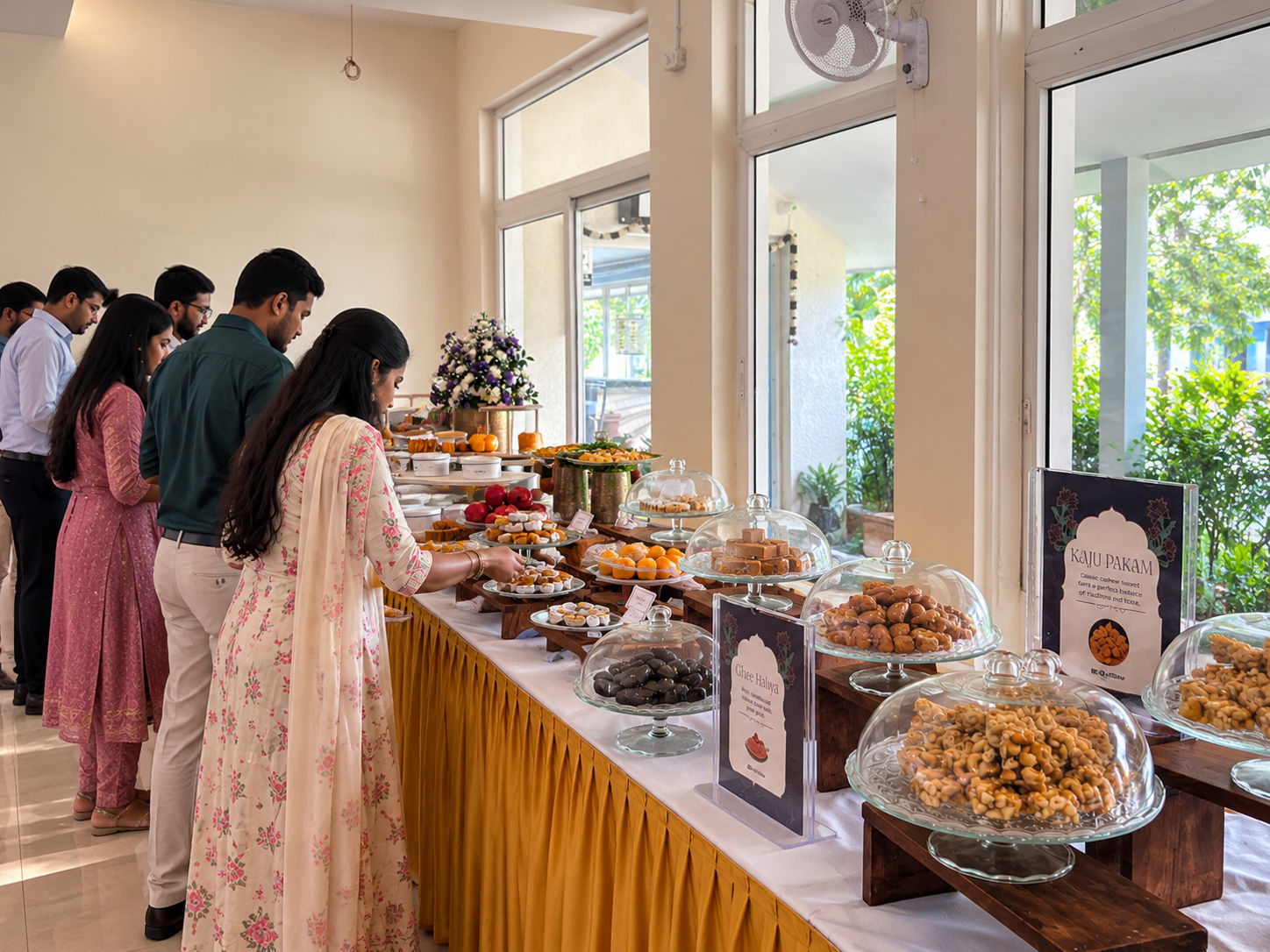
- Dessert: a spread of Indian sweets, an ice cream counter and a cake for the couple.
She noted that live counters need space, power and extra staff, and that they should be placed away from the main buffet to avoid blocking the line. Her wedding planner and the caterer agreed on the layout during a venue visit.
Entry Five: The Muhurtham Lunch
The traditional lunch was the opposite: seated, banana leaf, served by a team in a precise order. A vegetarian menu, because the muhurtham was in the morning and the family's tradition required it.
Her notes: "Serving in rows takes practice. Ask the caterer how many servers per row and how many rows. Ask what happens when a row finishes early."
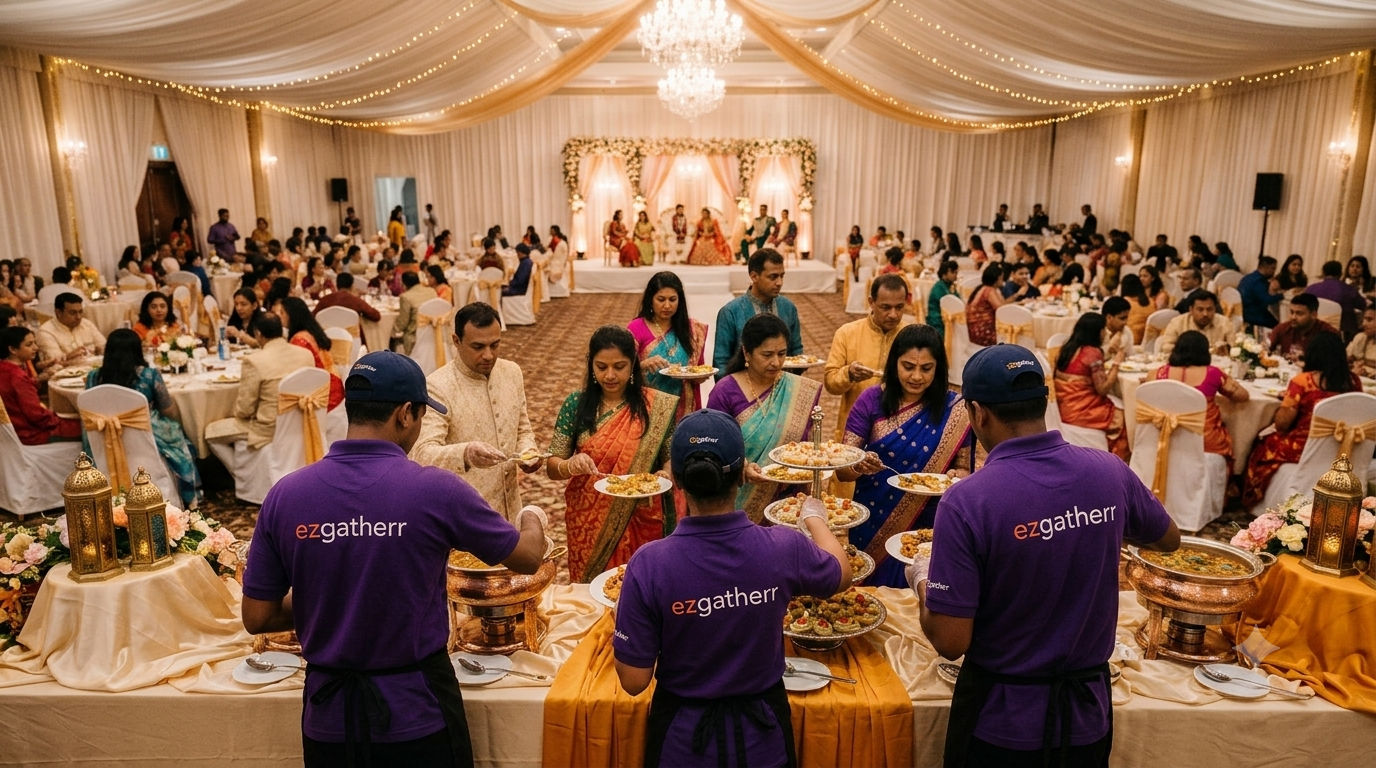
At a seated meal for 350, the caterer divides the hall into sections, with a team for each. Servers move along the rows with dishes in a set sequence, and a supervisor checks on pace. The skill is in the choreography, and not every vendor has it.
She asked the vendor for details, and received a clear answer: 25 servers, in teams for each of five rows, a supervisor on each side and a short briefing before the start. It reassured her.
Entry Six: The Logistics Calendar
Two weeks before: final headcount estimate, menu confirmed, advance paid. One week before: venue walk-through with caterer and planner, checking kitchen area, power, water, access and parking. Three days before: final headcount and dietary list shared. One day before: arrival times and contact numbers confirmed. On the day: meet the team lead, walk through the setup and agree who gives the signal to start serving.
For a multi-day wedding, a single document with the schedule for all functions is a gift to everyone involved.
Entry Seven: What Went Wrong, and What Did Not
Things do go wrong at weddings, and the diary is honest.
- The mehendi snacks ran out early. The vendor had estimated for 60, and 85 came. Lesson: add a larger buffer for informal events, where guests bring friends.
- The first batch of dosas was slow. The live counter had one chef. Adding a second solved it within ten minutes. Lesson: ask how many chefs per counter.
- A relative with a nut allergy. Sujatha had told the vendor, who prepared a separate meal. It was a quiet success.
- Rain at the reception. The outdoor area was moved inside. The caterer's team adapted in half an hour. Lesson: ask about contingency plans for weather.
None was a disaster. Each was handled because there was a plan and a person responsible.
Entry Eight: The Money
Sujatha's notes on cost are practical. She did not give numbers, but she gave principles.
- Compare total cost, not per plate. Inclusions differ.
- Know what is extra. Live counters, extra staff and late hours are common add-ons.
- Keep a contingency. She set aside about 10 percent.
- Get everything in writing. Menu, quantity, price, staff, timing and payment schedule.
At the time of writing, EZGatherr's wedding caterers page and its staffed buffet catering, listed from ₹399 per plate with a minimum of 10 guests, show how published starting points can help you calibrate your expectations before you ask for a custom quote. For a wedding, the actual price depends on the menu, the number of functions and the services included. Confirm directly.
Entry Nine: The Last Page
The final entry is short. "It went well. People ate on time. The elders were served first. Nobody went hungry. My daughter said the food was the one thing she did not have to think about. I would do the same again, but I would start the diary earlier."
What Other Families Can Take From This
Treat each function separately, since menu, timing and style differ. Ask about the team, not just the menu. Taste the delicate dishes. Walk through the venue. Plan for rain, extra guests and slow counters. And write it all down: a diary like Sujatha's becomes the plan.
A Fair Conclusion
A wedding is a long, emotional project. The right wedding caterers in Bangaloreare the ones who understand that, who ask about your traditions and your guests, and who treat their plan as seriously as you treat your ceremony.
Read More
- Wedding caterers in Bangalore
- Catering services in Bangalore
- Premium catering in Bangalore
- Catering services in Jayanagar
- Different Types of Catering Services Explained
Planning something similar? See our wedding caterers in Bangalore.
Read more
 Wedding Caterers in Bangalore: The Engagement Dinner in a Rented Hall
 Wedding Catering for Intimate Weddings: Planning Food for 50 to 150 Guests
 Wedding Caterers in Bangalore: What Guests Actually Remember About Wedding Food
 Wedding Caterers in Bangalore: A Planner's Notes on Headcount Drift
 Wedding Caterers in Bangalore: A Function-by-Function Food Guide