Wedding Caterers in Bangalore: A Planner's Notes on Headcount Drift
A planner explains headcount drift and how to work with wedding caterers in Bangalore on buffers, cut-offs and last-minute changes.

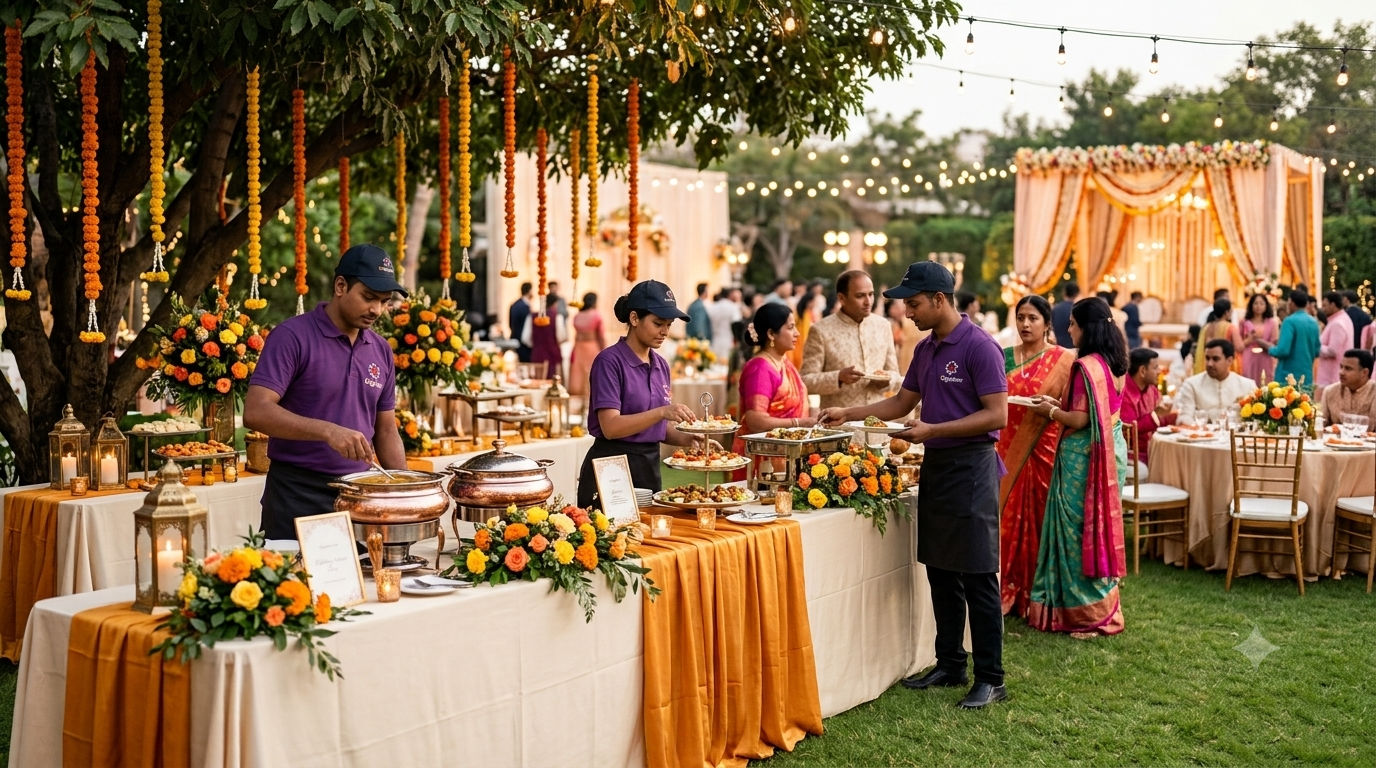
Every wedding planner has a version of the same story. The invitation list says 300. The RSVP count says 240. Registration on the morning of the wedding says 330. The caterer has food for 300, a stern look and a very polite question about extra portions. Nobody lied. Headcount at a wedding is simply not a number. It is a moving target.
This expert-style piece draws on the patterns planners and caterers describe and explains how headcount drift works, why it matters and how to work with wedding caterers in Bangalore to manage it. It is balanced: the vendor's constraints are as real as the host's.
Why Headcount Drifts
Several forces push the number up or down between the invitation and the day.
Plus-ones and families. Invitations addressed to "Mr and Mrs" arrive as four or five when children and parents join.
Unreturned RSVPs. Many guests say yes by phone, forget to update or simply turn up.
Last-minute additions. The groom's uncle suggests inviting a neighbour. The bride's father adds a business associate.
Drop-outs. Illness, travel and traffic reduce numbers, often at the last minute.
Timing effects. At a multi-hour event, the peak crowd may be much larger than the average. A reception that lasts four hours may have 200 people at one time and 400 over the evening.
Uninvited guests. Weddings sometimes draw people who were not on the list.
The result is that the number that matters, how many plates will actually be served, is rarely known until the event.
Why It Matters to the Caterer
Food is prepared in advance, based on quantities fixed days before. A headcount increase on the day can mean:
- A shortage. Dishes run out, particularly popular ones.
- A reduction in portions. The kitchen tries to stretch.
- A scramble. Staff are sent to cook more, if time and ingredients allow.
- A higher cost. Last-minute purchases and overtime.
A headcount decrease also costs money. Food has already been bought and prepared. Some can be repurposed, but much cannot.
This is why caterers set cut-offs, why they ask for numbers early and why they sometimes charge a premium for changes.
How Planners Think About the Number
Experienced planners use three numbers.
The invited number. Everyone on the list.
The expected number. What the planner thinks will attend, based on experience. For a wedding, this is often 75 to 90 percent of the invited number, though it varies widely by community and city.
The plan-for number. The expected number plus a buffer. This is the number given to the caterer.
The buffer depends on the event. A formal seated dinner with reserved seats has a smaller buffer. An open reception with walk-ins has a larger one. A buffer of around 10 percent is common, and more is sensible when many guests are uncertain.
Working With the Caterer on the Number
A good conversation with the vendor includes the following.
Share the three numbers. Invited, expected and plan-for. Let the vendor see how you arrived at it.
Agree on a cut-off. The date by which the number is confirmed. After that, changes are subject to terms.
Ask what happens above and below. What is the price for extra portions, and is there any refund for fewer?
Ask about a reserve. Some vendors keep an extra quantity of popular dishes, which can be used if the crowd is larger than expected.
Agree on a signal. On the day, who tells the caterer that numbers are rising, and how?
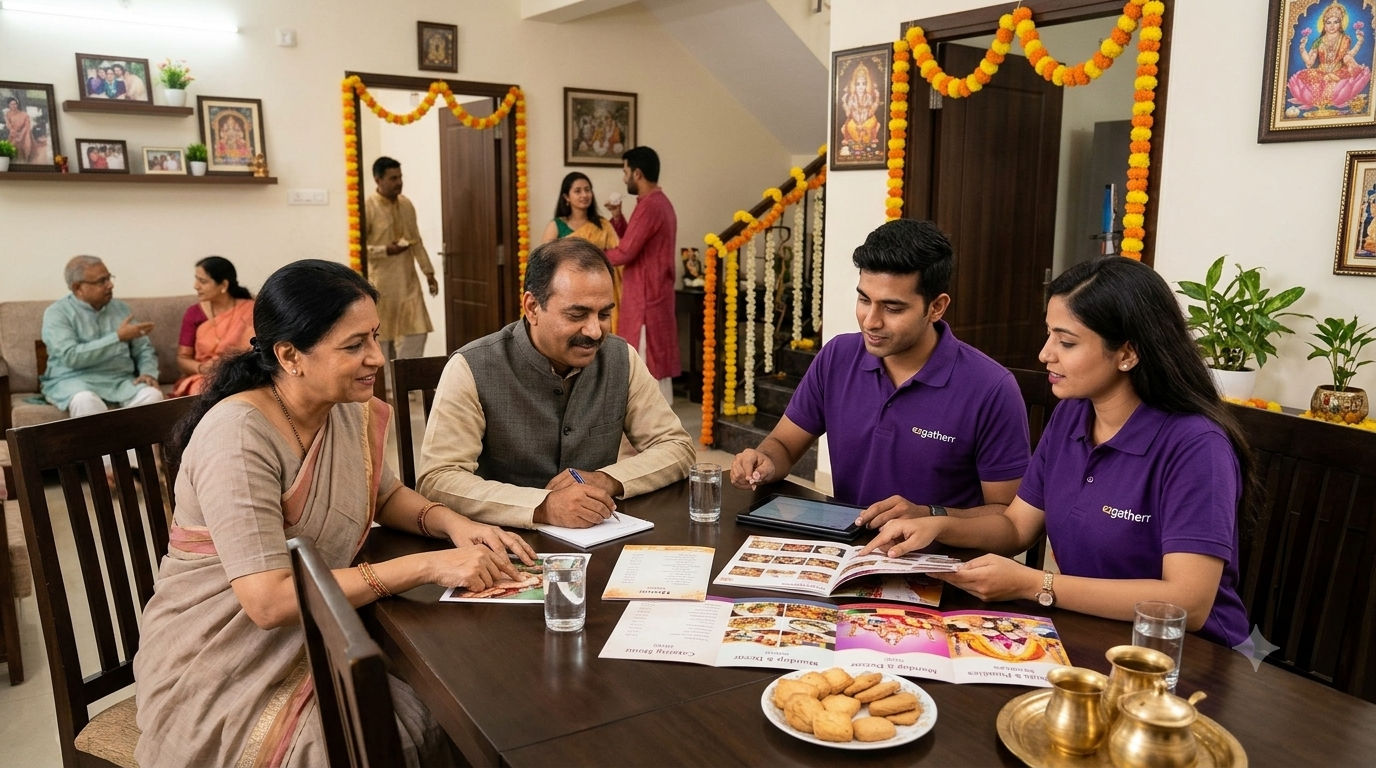
At the time of writing, EZGatherr lists staffed buffet catering from ₹399 per plate with a minimum of 10 guests, and states a cut-off structure for orders on its pages. For weddings and other large events, the specific change terms are agreed with the vendor. Confirm them in writing.
Practical Techniques to Control the Number
RSVP actively. A call or message to each family a week before is more effective than a card.
Use a simple form. Names, number of adults and children, dietary needs.
Track in a shared sheet. One person owns it, and updates it daily in the final week.
Assign a gatekeeper. Someone who approves additions. Without this, the list grows.
Count families, not individuals. Many guests arrive as a family unit, and the number per family is a better predictor than the individual count.
Review at fixed points. Four weeks, two weeks, one week and three days before.
Designing the Menu to Absorb Drift
Some menus handle uncertainty better than others.
- Dishes that stretch. Rice, biryani, dal and bread can be increased more easily than complex dishes.
- A flexible dessert. An ice cream counter or a tray of sweets can be topped up.
- A starter that is easy to scale. Passed items can be adjusted by the number of servings.
- A reserve dish. An extra batch of a popular dish held in the kitchen.
- Avoid dishes that cannot be made quickly. A complex dish that takes two hours cannot be replenished on the spot.
Ask your caterer which dishes are best suited to your uncertainty.
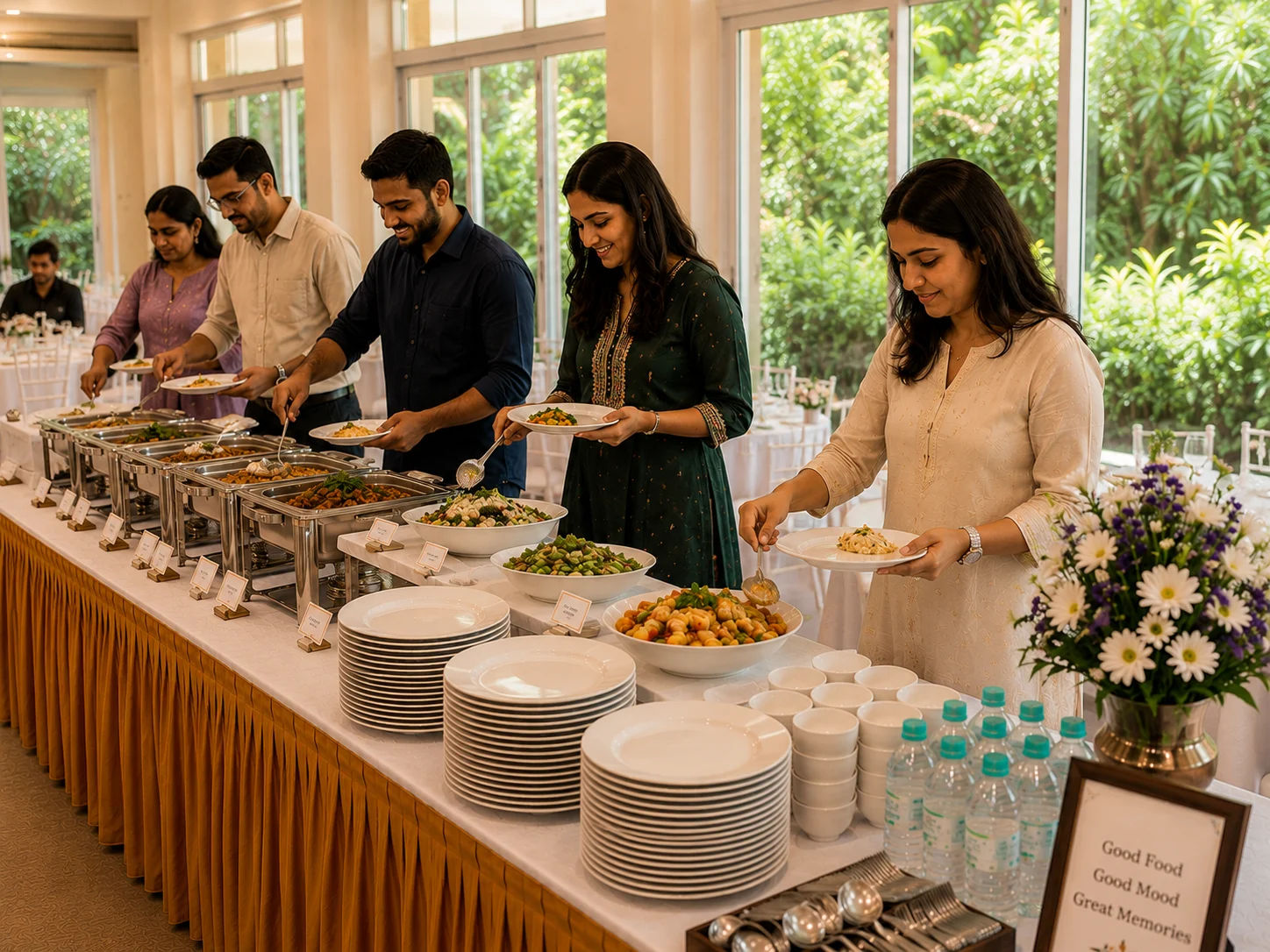
What Happens on the Day
Even with good planning, the final number may differ. A few practices help.
Observe the first hour. Planners and caterers watch the rate of arrival. If the first hour has already reached 60 percent of the expected number, the total may exceed it.
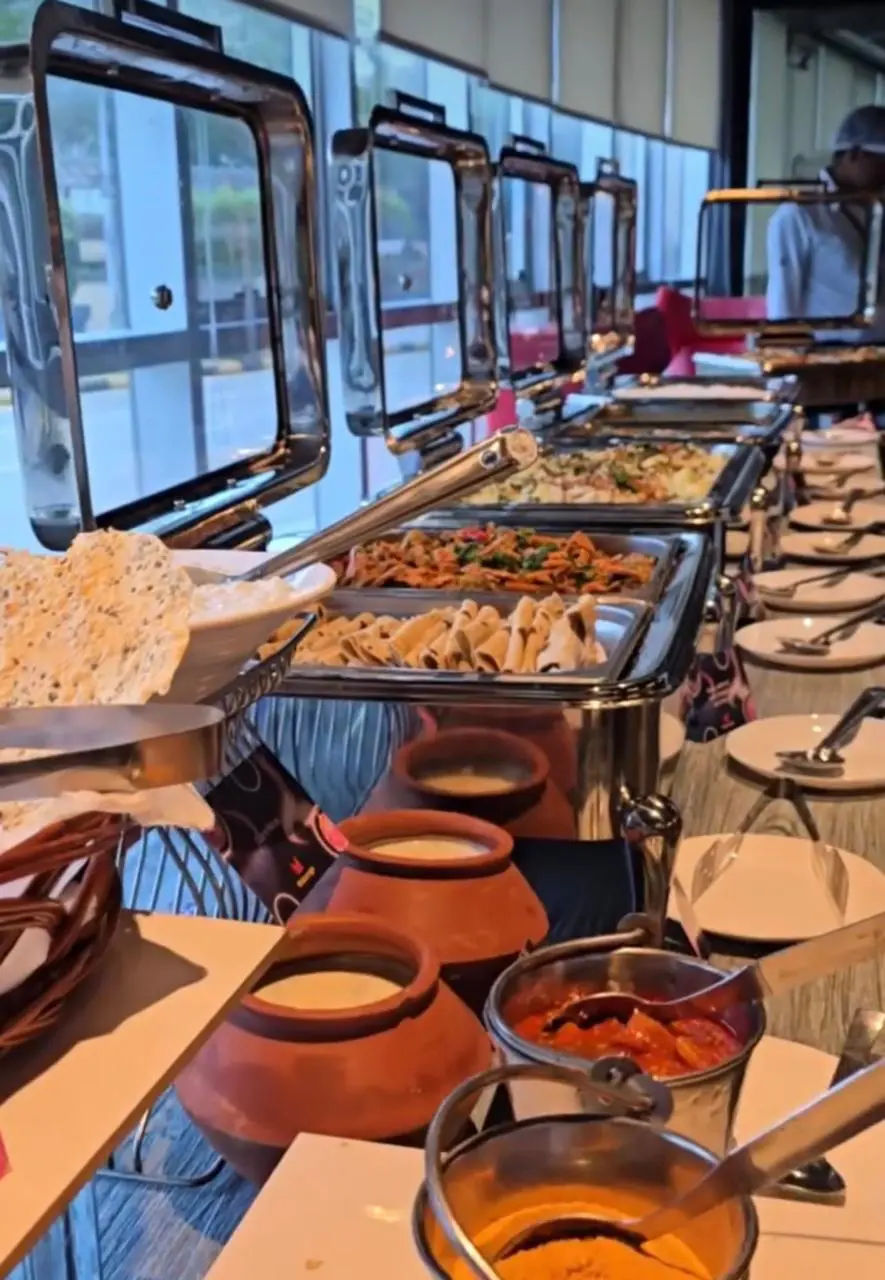
Open the buffet in stages. Starting with one counter and opening a second as the line grows helps pace the food.
Serve elders and family first. They are usually served before the buffet is crowded.
Keep a reserve. Hold back a portion of the main dishes until the crowd is clearer.
Communicate. A short message to the caterer's lead if the crowd is larger than expected gives the kitchen time to respond.
The Honest Trade-Offs
There is no perfect answer. A large buffer reduces the risk of running out, but costs more and may waste food. A tight number saves money but risks a shortage. A middle path, based on your tolerance for risk, is usually best.
For a wedding, running out of food is a serious embarrassment. Many families accept some waste to avoid it, and arrange for leftover food to be donated or shared with staff.
After the Event
A short debrief helps. Record the invited, expected, planned and actual numbers, and the percentage difference. Note which dishes ran out and which were left over.
Over time, a planner builds a sense of how a given community or type of event behaves. A host who does this once learns something for a lifetime.
A Fair Conclusion
Headcount drift is not a failure of planning. It is a feature of weddings. The best response is to work with the numbers honestly, communicate early and choose a vendor who understands.
When you speak to wedding caterers in Bangalore, ask how they handle a crowd that is larger or smaller than expected. A confident, specific answer is worth more than a promise.
Read More
- Wedding caterers in Bangalore
- Catering for 100 people in Bangalore
- Catering services in Bangalore
- Corporate party catering in Bangalore
- How to Plan Bulk Food Orders for Events
Planning something similar? See our wedding caterers in Bangalore.
Read more
 Wedding Caterers in Bangalore: The Engagement Dinner in a Rented Hall
 Wedding Catering for Intimate Weddings: Planning Food for 50 to 150 Guests
 Wedding Caterers in Bangalore: What Guests Actually Remember About Wedding Food
 Wedding Caterers in Bangalore: A Function-by-Function Food Guide
 Wedding Caterers in Bangalore: A Bride's Mother's Diary of Four Functions