Food Caterers in Bangalore: What Happens in the Kitchen the Night Before Your Event
What food caterers in Bangalore do in the kitchen the night before your event, from procurement and marinating to packing and transport.

Most hosts see the food at one moment: when it arrives, hot and arranged, at the venue. What happens before that moment is invisible, and it explains most of what goes right or wrong. Behind a smooth event is a schedule that starts the day before, sometimes earlier, and involves buying, cutting, marinating, cooking, packing and loading.
This expert-style walkthrough follows a typical preparation timeline used by professional food caterers in Bangalorefor a mid-sized event of around 80 guests. The details vary by kitchen and menu, but the sequence is common. Knowing it helps hosts ask better questions and set realistic expectations.
Two Days Before: Confirmation and Procurement
The preparation starts with numbers. Once the host confirms the headcount, the dietary split and the menu, the kitchen converts these into quantities.
For each dish, someone calculates raw material: kilograms of rice, litres of oil, quantities of paneer, chicken, vegetables, spices and packaging. This requires experience, because yield varies by ingredient and recipe.
Then comes procurement.
- Perishables such as vegetables, dairy and meat are usually bought one day before or on the morning of cooking, to maximise freshness.
- Dry goods such as rice, flour and spices come from stock.
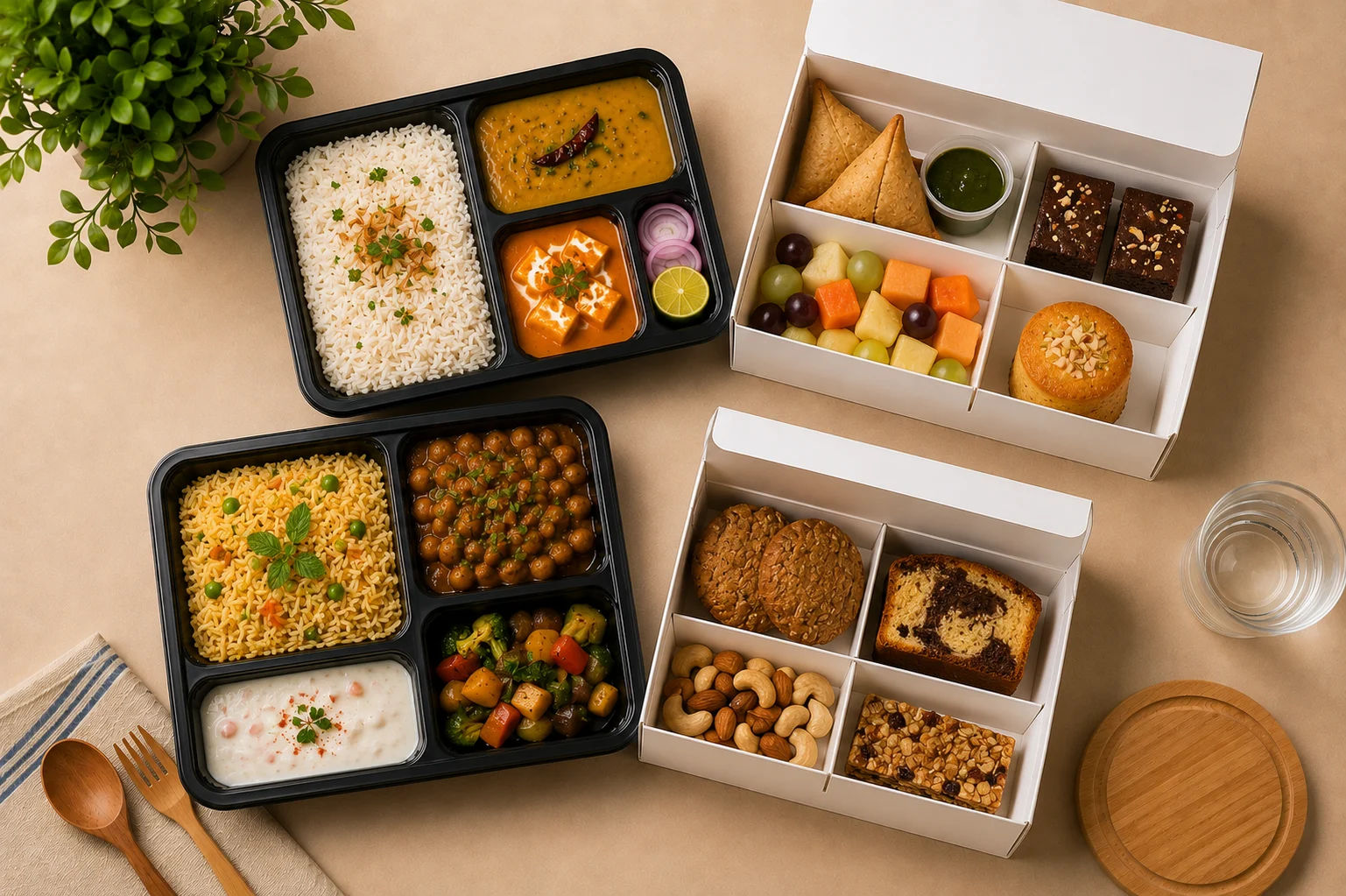
- Packaging such as containers, cutlery, napkins and labels is counted and set aside.
- Equipment such as chafing dishes, serving spoons and vehicles is checked.
This is also when a good vendor confirms any special needs, such as Jain portions or an allergy meal, and assigns them to a specific cook.
What it means for you: changes to the headcount or menu after this point become harder and more expensive. This is why caterers have cut-offs.
The Day Before, Morning: Preparation Begins
Kitchens divide the work in stages.
Cutting and cleaning. Vegetables are washed, peeled and chopped. For an event of 80, this takes several people hours.
Marinating. Chicken, paneer and other proteins are marinated, often overnight. This is why starters like tikkas and kebabs need advance notice.
Gravies and bases. Many gravies start with a base of onions, tomatoes and spices that can be cooked in advance and finished on the day.
Dals and lentils. Soaked, boiled and sometimes cooked ahead, then reheated and tempered on event day.
Desserts. Sweets such as gulab jamun, halwa or payasam often start the day before, since they need time to set, soak or cool.
What it means for you: a menu with many complex dishes needs more preparation. A shorter menu often gives each dish more attention.
The Evening Before: The Quiet Work
In the evening, the kitchen shifts from preparation to organisation.
- Packing lists are written, listing every dish, container, serving item and label.
- Vehicles are assigned, with routes planned and timing estimated.
- Staff are briefed. Who is the lead, who goes with the vehicle, who stays in the kitchen?
- Labels are printed for dishes, with veg and non-veg markers.
- Dietary meals are set aside with names.
- Equipment is checked: chafing dishes, fuel, lighters, serving spoons, tablecloths.
This is the stage where small mistakes are prevented. A missing serving spoon or an unlabelled dish can cause confusion at the venue.
The Night: Cooking Begins for Some Dishes
Some items are cooked overnight or in the early hours, particularly slow-cooked dishes such as biryani dum, dal makhani and certain curries. Others are cooked on the morning of the event, closer to service.
The kitchen decides based on the dish. A biryani benefits from time to settle. A fried starter is best made shortly before service. A dessert may be best chilled overnight.
What it means for you: if you request a late change to a dish, it can disrupt the schedule. Ask early, and be flexible where possible.
Event Morning: Final Cooking and Packing
On the day, the kitchen team arrives early. For a lunch event at 1 PM, cooking may begin at 4 or 5 AM.
- Final cooking of the freshest dishes.
- Tasting by the head cook, who adjusts salt and spice.
- Temperature checks for food leaving the kitchen.
- Packing into insulated containers, with labels.
- Loading onto vehicles in an order that suits unloading: heavy containers at the bottom, serving items accessible.
- A final check against the packing list.
The team lead typically calls the host to confirm the departure time and ask for any last changes.
Transport: The Part Nobody Sees
Transport is where many delays occur. A vehicle can be held up by traffic, rain, a wrong turn or a blocked gate.
Good vendors plan for this.
- Buffer time. They leave earlier than the minimum.
- Route knowledge. Drivers know the area, or are given precise directions.
- Contact. The driver and the host have each other's numbers.
- Backup. Some vendors keep a spare vehicle or a second driver for large events.
You can help by sharing a map pin, a landmark, gate instructions and the contact of the person receiving the food.
At the Venue: Setup
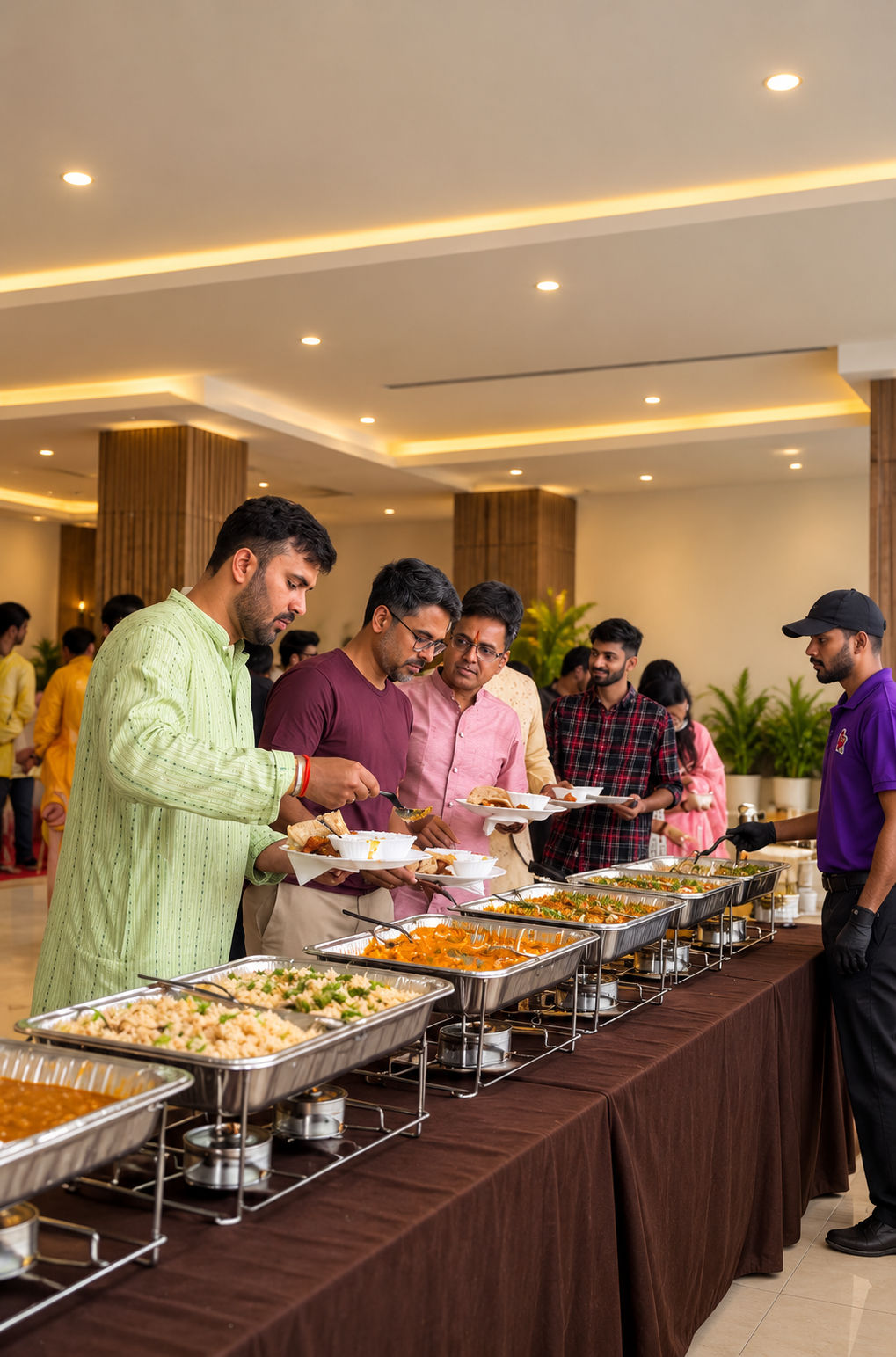
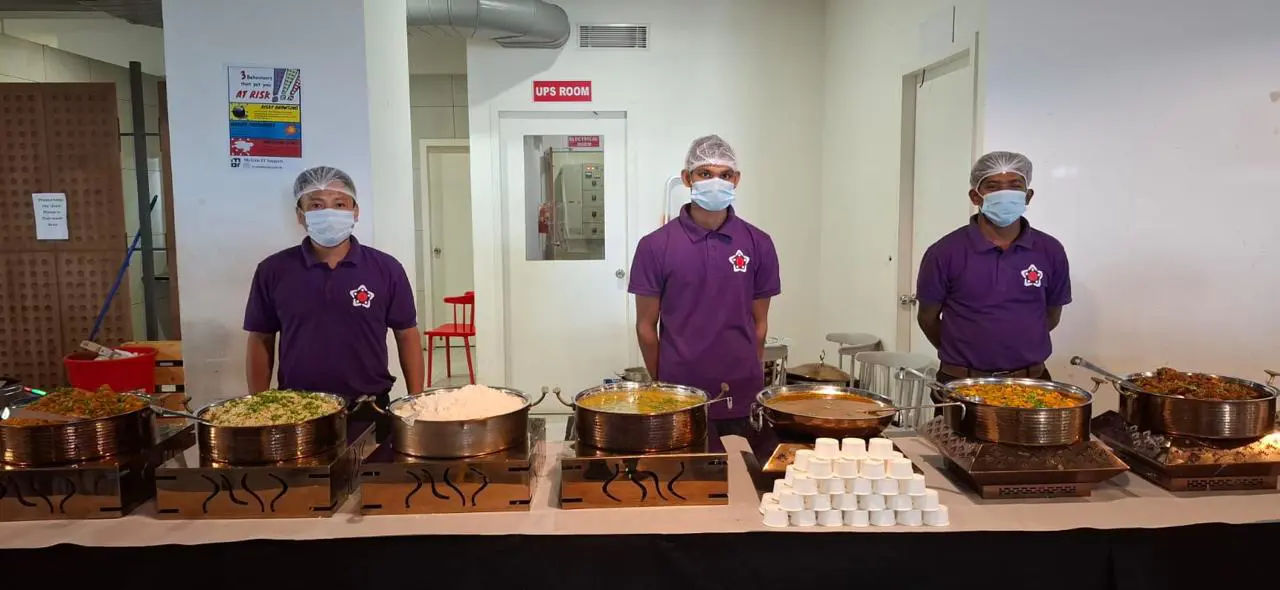
On arrival, the team assesses the space and sets up.
- Counter layout. Tables arranged for a smooth flow.
- Heating. Chafing dishes lit, with fuel checked.
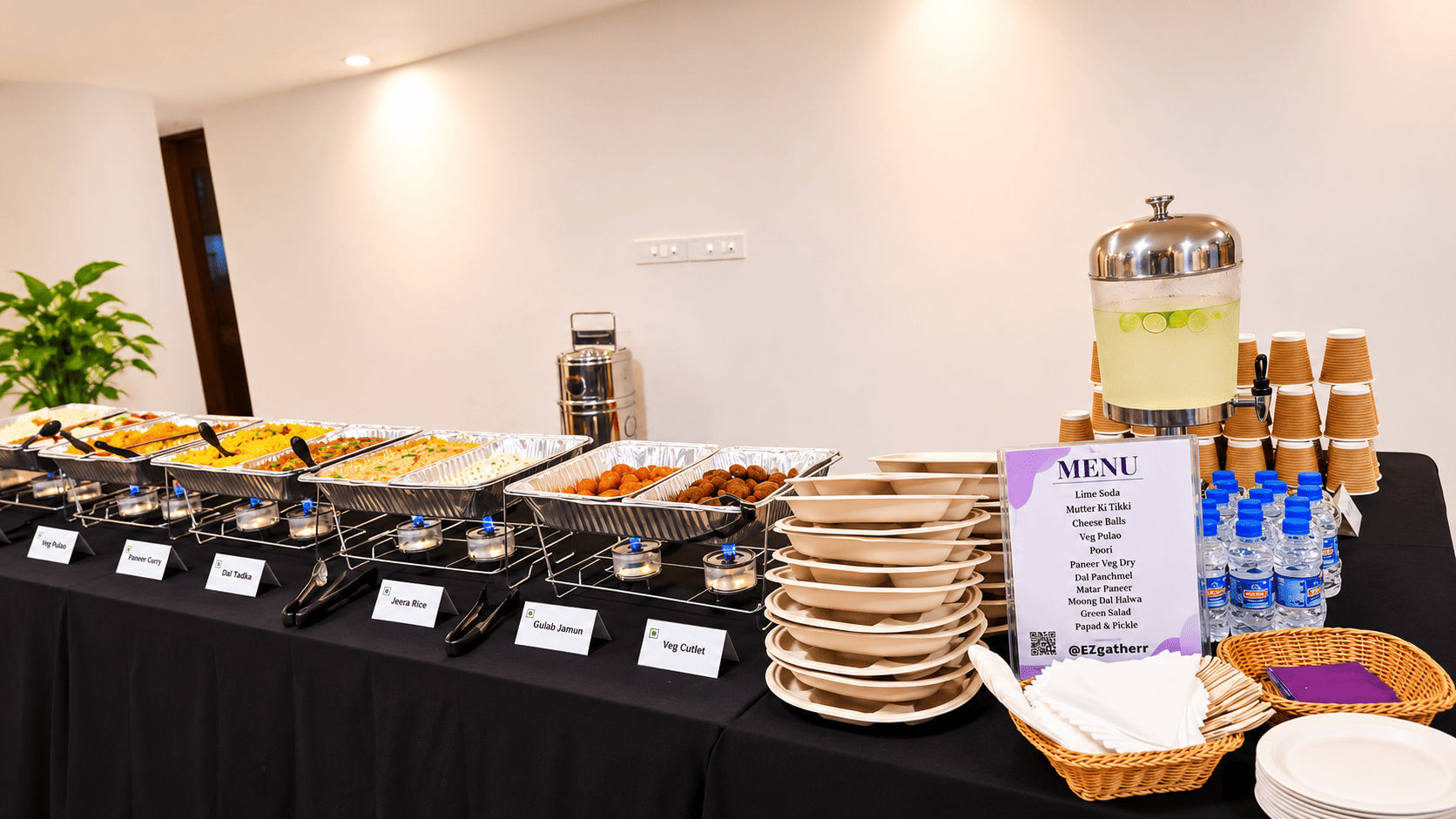
- Serving order. Dishes placed in a logical sequence: plates, starters, mains, breads, sides, desserts.
- Labelling. Each dish tagged.
- Water and beverages. Placed apart from the food counters.
- A final taste. The lead checks that each dish is as intended.
For a buffet, setup may take 45 to 90 minutes. For bulk delivery, it is quicker, since the host handles serving.
At the time of writing, EZGatherr's staffed buffet catering is listed from ₹399 per plate, including service staff, cutlery, crockery and setup, with bulk food from ₹249 per person. The difference reflects this stage and the staff who manage it. Prices change, so confirm current details.
Service and Clearing
During service, staff refill dishes, replace chafing fuel, monitor temperature and keep the counter tidy. They also watch the crowd, to anticipate which dishes will run out.
After service, they begin clearing. Leftover food is packed according to the host's wishes. Equipment is collected, the area is cleaned and the vehicle is loaded.
What Hosts Can Learn From This Timeline
Respect the cut-off. Changes after procurement and preparation are costly.
Ask about quantities. A good vendor can tell you the weight or portions per dish.
Share precise logistics. Access, lifts, power and parking affect setup.
Be reachable. On the day, answer calls quickly.
Be flexible about timing. A small adjustment can solve a logistics problem.
Appreciate the invisible work. A kind word to the team goes a long way.
A Fair Conclusion
Every event you attend, with food that arrives hot and on time, is the result of hours of unseen work. Understanding that work does not make you a chef, but it makes you a better host and customer.
When you speak tofood caterers in Bangalore, ask them about their process, and you will learn more about their reliability than any menu will tell you.
Read More
- Bulk food delivery in Bangalore
- Catering services in Bangalore
- Catering near me in Bangalore
- What Does a Caterer Do? Complete Catering Guide
- Different Types of Catering Services Explained
Planning something similar? See our bulk food delivery in Bangalore and catering services in Bangalore.
Read more
 Food Caterers in Bangalore: Veg, Non-Veg, Jain and Allergies at One Table
 Food Catering Services: Types, Menus and Planning Tips
 Bulk Food Delivery: How Much to Order for 20, 50 or 100 Guests
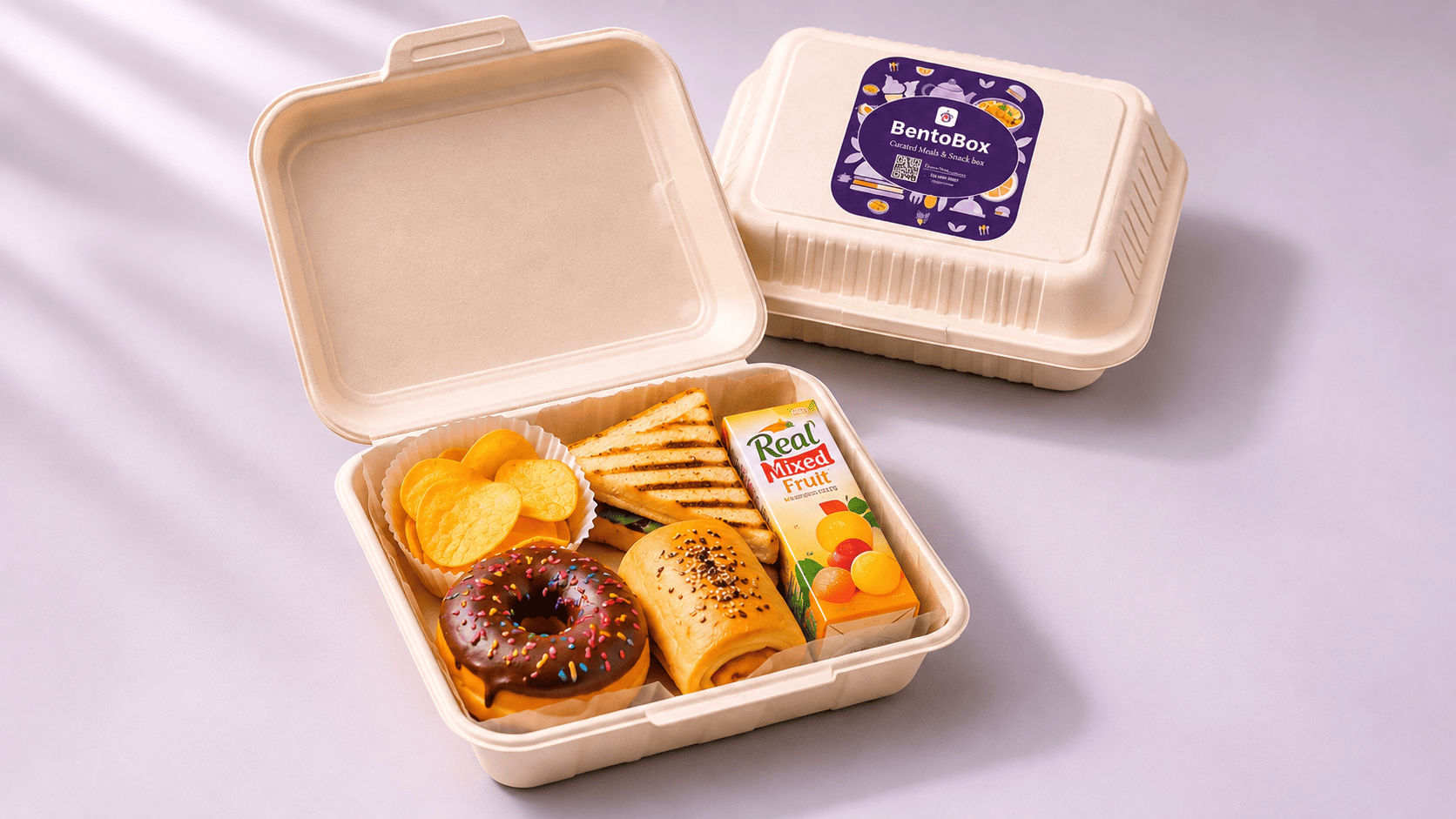 Food Caterers in Bangalore: A Training Manager's Case Study in Boxes, Breaks and Budgets
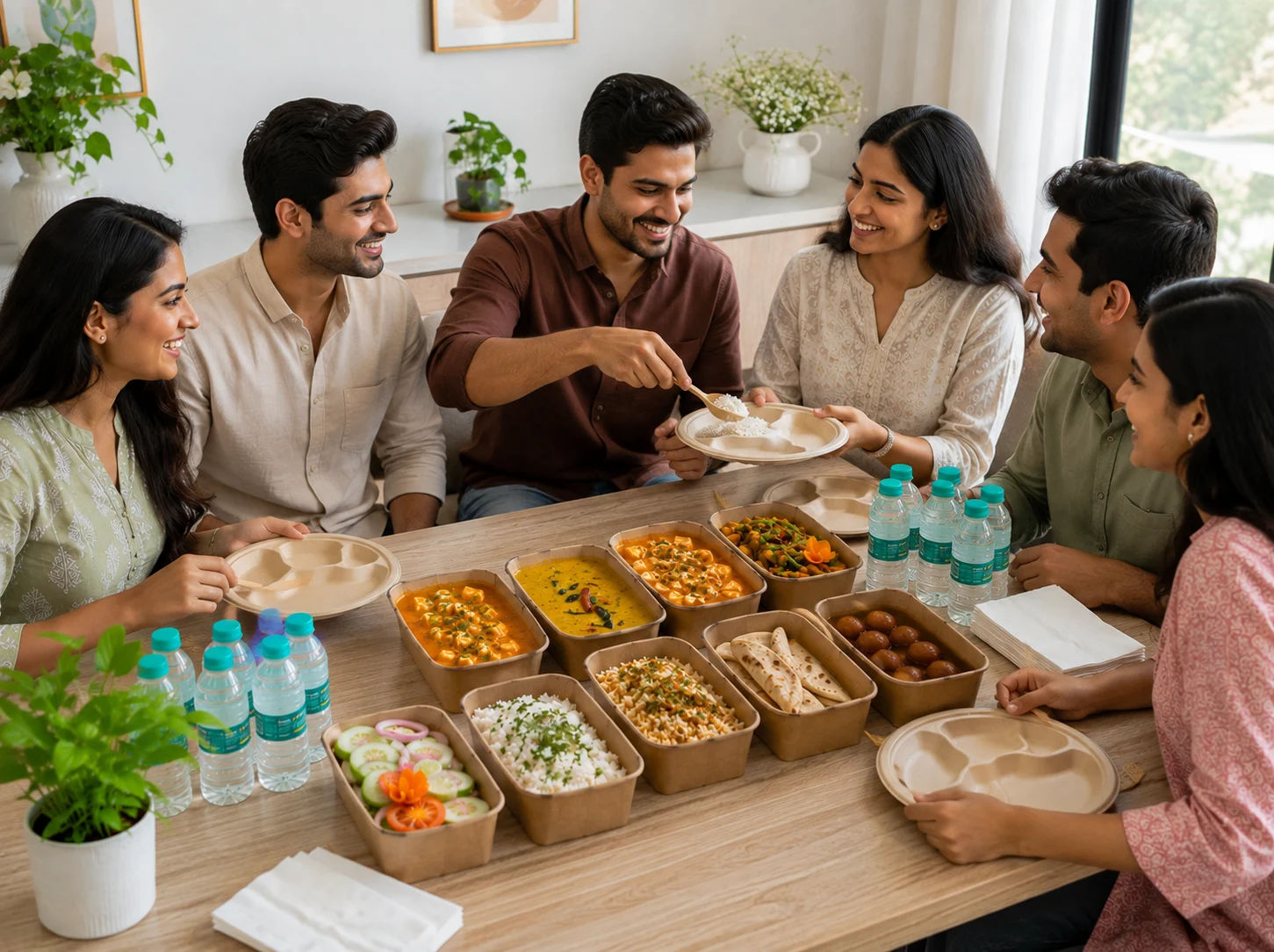 How to Plan Bulk Food Orders for Events